

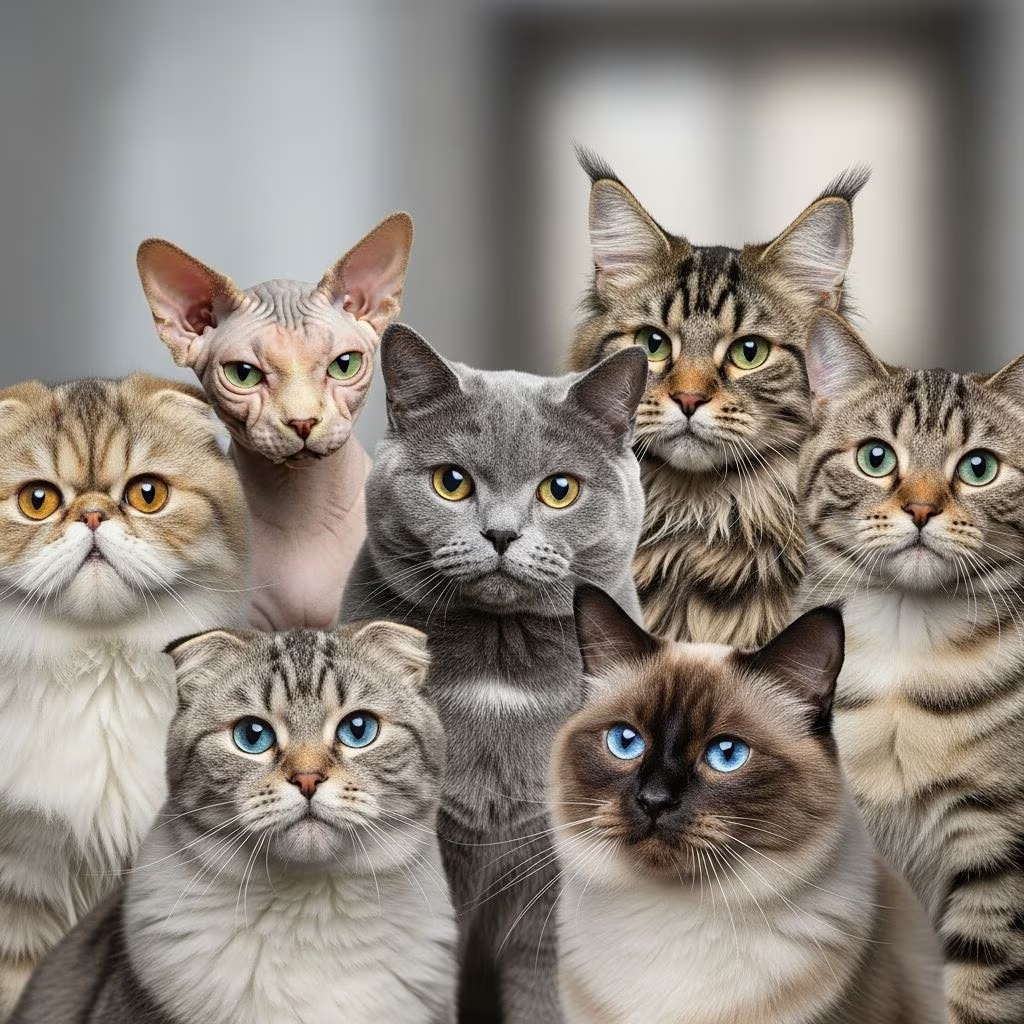
While purebred cats captivate with their distinctive looks and personalities, their limited gene pools often lead to heightened risks of inherited health problems. Research from the University of London’s Royal Veterinary College reveals that two-thirds of certain purebreds suffer from at least one condition. Brachycephalic breeds like Persians face breathing and eye issues, while others grapple with blindness, heart disease, and crippling joint disorders. This article details seven breeds most affected, drawing on veterinary studies and expert insights to help owners make informed choices.
Persians
Renowned for their luxurious long coats, snub noses, and expressive doe eyes, Persians rank as the sixth most popular cat breed in the UK. However, their brachycephalic—flat-faced—structure predisposes them to multiple health woes. Vet Dr. Lizzie Youens notes that these cats face elevated risks of breathing difficulties and eye diseases due to their facial conformation.
Studies confirm Persians commonly endure haircoat disorders, dental malocclusions, overgrown nails, and chronic eye discharge. Critically, polycystic kidney disease (PKD) affects up to 49% historically, with cysts progressively destroying kidney function, often leading to chronic kidney disease and early death. Brachycephalic obstructive airway syndrome (BOAS) compounds issues, featuring elongated soft palates, pinched nostrils, narrow windpipes, and obstructed airways that hinder eating, sleeping, and breathing.
Genetic testing via DNA swabs has slashed PKD prevalence in screened populations, proving breeding from unaffected cats can dramatically improve outcomes. Owners should prioritize regular veterinary check-ups, including ultrasounds for PKD and dental cleanings, to manage these risks effectively.
Bengals
Bengals dazzle with their wildcat-like spotted coats, high energy, playfulness, and intelligence. Yet, their hybrid origins from Asian leopard cats introduce hereditary vulnerabilities. Cataracts, causing eye cloudiness typically in seniority, and progressive retinal atrophy (PRA)—an irreversible blindness-inducing degeneration—are frequent. Nearly 10% also develop distal neuropathy, a nerve disorder causing weak or paralyzed hind limbs.
These athletic cats demand vigilant eye exams for early PRA detection, as no cure exists. Responsible breeders screen for these traits, but owners must monitor for vision loss, mobility issues, and ensure environmental adaptations like low furniture for affected cats.
Ragdolls
Gentle giants known for going limp when held, Ragdolls boast striking blue eyes and semi-long fur. However, hypertrophic cardiomyopathy (HCM)—the leading feline heart disease—strikes them disproportionately, alongside PKD. Obesity, blood clots (thromboembolism), and cryptococcosis—a fungal infection causing nasal discharge, sneezing, breathing woes, and potentially seizures or blindness—add to concerns.
HCM thickens heart walls, risking sudden death or heart failure; genetic tests identify carriers. Cryptococcosis, more common in certain regions, requires antifungal treatment. Weight management through diet and exercise prevents obesity-exacerbated issues. Annual cardiac ultrasounds are vital for early intervention.
Siamese
Iconic for their sleek shorthair bodies, dark points, and vocal nature, Siamese cats face elevated cancer risks. Mediastinal lymphoma in young feline leukemia-positive cats and intestinal adenocarcinomas—tumors up to eight times more prevalent than in other breeds—pose serious threats. Progressive retinal atrophy (PRA), asthma, hip dysplasia, arthritis, and pica (eating non-food items) further burden them.
Dr. Debbie Stoewen highlights Siamese’s doubled intestinal cancer risk. Vaccinations against feline leukemia, routine imaging, and behavioral interventions for pica mitigate dangers. Eye exams track PRA progression.
Exotic Shorthairs
Dubbed ‘lazy man’s Persians,’ Exotic Shorthairs share the flat face and stocky build but with plush short coats. Like Persians, PKD looms large, with cysts risking kidney failure. Brachycephalic traits invite BOAS, eye ulcers, entropion (inward eyelids), and respiratory distress. Dental disease from misaligned jaws is rampant.
Genetic screening prevents PKD transmission. Owners must watch for labored breathing, promote humidity to ease airways, and schedule frequent eye and dental evaluations.
Scottish Fold
The endearing folded ears of Scottish Folds stem from a cartilage-defective gene causing osteochondrodysplasia, or Scottish Fold disease—a dominant trait affecting all carriers. Symptoms include fused tail, ankle, and knee joints, yielding short, malformed limbs, chronic pain, lameness, and immobility. Severe cases in double-gene kittens render walking impossible.
Banned by UK bodies like GCCF for welfare reasons, the condition raises ethical breeding dilemmas. Pain management and mobility aids offer limited relief; prevention via non-fold breeding is urged.
Manx
Tail-less tailless wonders from the Isle of Man, Manx cats carry a mutation excessively shortening the spine, sparking Manx Syndrome in up to 20% historically. Manifestations hit bowels (constipation), bladder (incontinence), and nerves (hind limb paralysis), plus digestion woes.
Breeding refinements have curbed incidence, but vigilance for neurological signs remains key. Surgical corrections sometimes aid severe spina bifida-like defects.
Additional Cat Breeds with Health Problems
Beyond these seven, purebreds broadly risk heritable ills from inbreeding. Sphynx suffer skin issues and HCM; Himalayans and Burmese echo brachycephalic woes; Maine Coons and Norwegian Forest cats battle HCM; Cornish/Devon Rex face myopathies; British Shorthairs encounter PKD and heart conditions. Munchkins endure achondroplasia-induced arthritis.
Prevalence Snapshot: UK data shows British Shorthairs (3%), Ragdolls (1.8%), Bengals (1.2%) topping purebred presentations for disorders like periodontal disease and obesity.
How to Choose a Healthier Purebred Cat
Opt for breeders using genetic tests for PKD, HCM, PRA. Demand health clearances, pedigrees sans extreme traits. Mixed breeds often dodge breed-specific plagues via diverse genes. Vet-supervised DNA tests ensure accuracy.
| Breed | Key Genetic Issue | Prevalence/Test |
|---|---|---|
| Persian/Exotic | PKD | Up to 49%; DNA test |
| Ragdoll/Maine Coon | HCM | Common; Genetic screening |
| Scottish Fold | Osteochondrodysplasia | 100% carriers; Avoid breeding |
| Siamese | PRA/Cancer | High; Eye exams |
Frequently Asked Questions (FAQs)
What causes genetic disorders in purebred cats?
Limited gene pools from selective breeding amplify harmful mutations, unlike diverse mixed breeds.
Can genetic testing prevent these issues?
Yes, DNA tests for PKD, HCM, PRA allow excluding carriers, slashing disease rates.
Are all purebreds unhealthy?
No, but many face breed-specific risks; responsible breeding mitigates them.
Should I avoid purebred cats?
Not necessarily—choose health-screened ones from ethical breeders.
How do I care for a brachycephalic cat?
Monitor breathing, eyes; use harnesses, avoid heat; regular vet checks.
References
- 7 Purebred Cat Breeds Likely to Suffer from Genetic Disorders — Kinship.com. 2023. https://www.kinship.com/uk/cat-health/7-purebred-cat-breeds-likely-to-suffer-from-genetic-disorders
- Inherited Conditions in Cat and Dog Breeds — Peak City Vet. 2024. https://peakcityvet.com/inherited-conditions-in-cat-and-dog-breeds/
- Cat breeds: the hidden problem of inherited diseases — Veterinary Ireland Journal. 2022. https://www.veterinaryirelandjournal.com/small-animal/74-cat-breeds-the-hidden-problem-of-inherited-diseases
- Inherited disorders in cats — International Cat Care. 2023. https://icatcare.org/articles/inherited-disorders-in-cats
- Abnormalities in Pedigree Cats — Vet Times. 2021. https://www.vettimes.co.uk/app/uploads/wp-post-to-pdf-enhanced-cache/1/abnormalities-in-pedigree-cats.pdf
- Framework to refocus the conversation around the welfare of UK purebred cats — Cambridge Core. 2023. http://resolve.cambridge.org/core/journals/animal-welfare/article/framework-to-refocus-the-conversation-around-the-welfare-of-uk-purebred-cats/CBD28A8813FD504552FE6965AF4C234B
- Commonly diagnosed disorders in domestic cats in the UK — PMC (PubMed Central). 2024. https://pmc.ncbi.nlm.nih.gov/articles/PMC10812063/



