

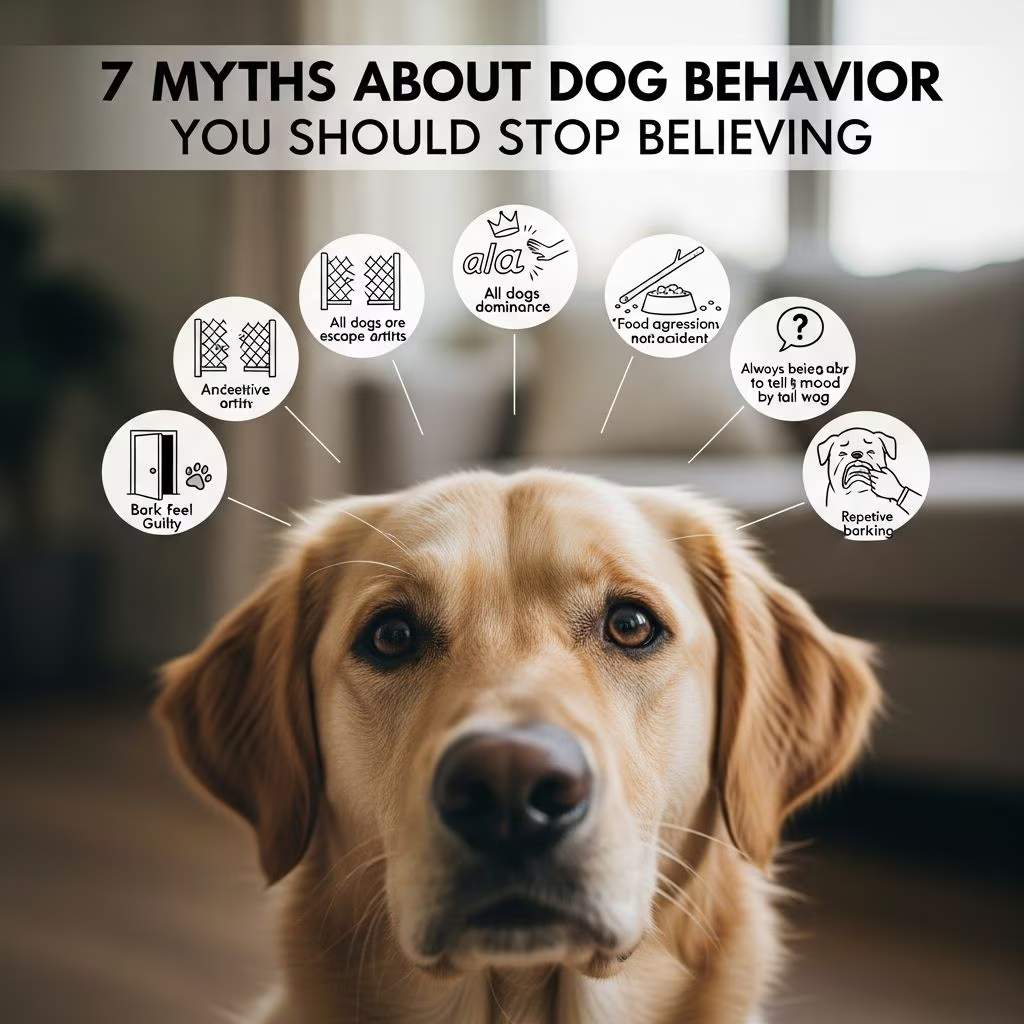
Dogs share our homes, our couches, and often our beds, yet many long-held beliefs about how they think and feel are misleading or downright harmful. For decades, popular training culture has focused on control, blame, and myths about dominance, rather than on communication, welfare, and science-backed care. This article unpacks seven common myths about dog behavior and replaces them with evidence-based insights that can help you build a healthier, more respectful relationship with your dog.
Modern behavioral research shows that owner behavior, environment, and the human–dog relationship shape dog behavior far more than outdated ideas about “alpha” status or willful disobedience. Understanding that your dog is not trying to outsmart or manipulate you—but instead responding to stress, learning history, and social needs—changes everything about how you live together.
Myth 1: “Dog Behavior Problems Are Mostly the Dog’s Fault”
A deeply ingrained belief is that if a dog is reactive, fearful, or destructive, it must be a “bad dog.” In reality, behavior is a product of genetics, learning, and environment—and humans influence all three.
Research on human–canine relationships indicates that owner management practices, expectations, and emotional responses significantly affect dogs’ behavior. Many so‑called “problem behaviors” are normal canine responses to confusion, unmet needs, or inconsistent handling, not signs of stubbornness or spite.
What’s really going on
- Dogs repeat behaviors that are reinforced—even unintentionally, such as giving attention when they jump.
- Unclear or constantly changing rules make it difficult for dogs to understand what is expected of them.
- Lack of socialization, inadequate exercise, and limited mental stimulation contribute to excess energy, anxiety, and reactivity.
- Owner stress and frustration can affect a dog’s stress hormones and behavior.
How to respond more fairly
- View behavior as information, not defiance. Ask: What is this behavior telling me?
- Check for medical issues whenever there is a sudden change in behavior.
- Work with qualified, evidence-based trainers who emphasize humane methods and environmental adjustments, not punishment.
- Invest in owner education: learning how dogs perceive the world is key to improving behavior.
Myth 2: “Dogs Are Trying to Dominate You”
The dominance myth—often tied to “alpha” and “pack leader” language—suggests dogs constantly test our authority and need to be physically or socially put in their place. This idea stems from outdated interpretations of wolf behavior and has been widely challenged by modern behavioral science.
Dominance is a description of a relationship over particular resources, not a stable personality trait like “dominant dog.” Using confrontational techniques to “show the dog who’s boss” has been linked to increased aggression and fear. For example, methods such as alpha rolls, harsh leash corrections, and intimidation can escalate stress rather than resolve underlying issues.
Why the dominance model falls short
- Most dogs with aggression are fearful or conflicted, not power-hungry.
- Confrontational techniques can cause dogs to defend themselves, leading to more serious bites.
- Dogs view humans more like attachment figures (similar to parents) than same-species pack mates.
- Behavior problems often improve when fear and confusion are reduced, not when dominance is asserted.
What works better than “being alpha”
- Use clear, consistent cues and reward-based training to teach desired behaviors.
- Manage situations to prevent rehearsing unwanted behavior (e.g., baby gates, leashes, appropriate confinement).
- Focus on building trust so your dog feels safe enough to learn and cooperate.
- Aim to be a calm, predictable leader—not a source of fear.
Myth 3: “Dogs Are Manipulative or Spiteful”
Many people describe dogs as “manipulative” when they beg, bark, or seem to ignore cues, or as “spiteful” when they chew furniture or have accidents after being left alone. But studies on canine cognition show dogs are excellent at reading human body language and patterns, not at plotting revenge.
Dogs learn quickly which behaviors get results. If whining at the table sometimes leads to dropped snacks, they will continue to try it. If chewing the couch happens only when they are stressed and alone, it is more likely an outlet for anxiety than a deliberate attempt to upset you.
Why dogs look like they’re “lying”
- Dogs track reliability: they can distinguish between people who give accurate versus inaccurate information and adjust their behavior accordingly.
- They may ignore you if previous cues were inconsistent, confusing, or unrewarding.
- Expressions like the “guilty look” often appear in response to human scolding, not to the dog understanding moral wrongdoing.
Reframing “manipulation” as learning
- Identify what the dog is gaining from a behavior: attention, food, play, or relief from boredom.
- Replace unwanted behaviors with acceptable alternatives that meet the same need (e.g., chew toys, puzzle feeders, training games).
- Stop rewarding behaviors you want to reduce—even eye contact or talking can reinforce begging.
- Avoid moral labels: focus on cause and effect instead of blame.
Myth 4: “Dogs Don’t Need Much Mental Stimulation”
Another common misconception is that as long as a dog gets a quick walk and a full bowl, they are fine. However, modern pet dogs evolved alongside humans with tasks such as guarding, herding, hunting, and companionship. Many breeds still retain strong working instincts and cognitive needs.
When mental needs go unmet, dogs may become restless, vocal, destructive, or obsessive. Providing appropriate outlets for their brains can significantly reduce behavior problems and improve overall welfare.
Signs your dog may be under-stimulated
- Frequent pacing or inability to settle even after physical exercise
- Excessive barking or whining at minor triggers
- Chewing, digging, or getting into trash when left alone
- Repetitive behaviors, like spinning or tail chasing
Simple ways to enrich your dog’s life
- Use food puzzle toys, snuffle mats, and scatter feeding to engage their sense of smell.
- Teach new tricks and cues periodically, even if you don’t “need” them.
- Offer breed-appropriate activities (e.g., scent work, fetch, tug, tracking games).
- Rotate toys and chews to maintain novelty and interest.
| Need | Common Myth | Better Practice |
|---|---|---|
| Physical exercise | “A quick walk is enough for any dog.” | Match exercise to age, breed, and health; many dogs need varied activities. |
| Mental stimulation | “Dogs just need toys.” | Incorporate problem-solving, training, and scent games daily. |
| Social bonding | “Love alone fixes behavior.” | Combine affection with structure, predictability, and training. |
Myth 5: “If a Dog Misbehaves, They Just Need Stricter Discipline”
It is tempting to assume that harsher corrections will eliminate unwanted behavior. However, evidence from behavior research and clinical practice suggests that punishment-focused approaches often increase fear, anxiety, and aggression without teaching what to do instead.
Dogs learn best when they feel safe and can predict consequences. Discipline that focuses on intimidation or pain may stop behavior in the moment, but it does not address why the behavior occurred and can damage the dog–owner relationship.
Problems with punishment-heavy training
- Dogs may learn to hide behaviors rather than stop feeling the urge to do them.
- They may associate punishment with the person, environment, or other animals, creating new fears.
- Escalating punishment can lead to aggressive responses when dogs feel cornered or threatened.
What to do instead of just being “stricter”
- Use positive reinforcement: reward desired behaviors generously so they become your dog’s default.
- Manage the environment to prevent practice of unsafe or unwanted behaviors (e.g., secure trash, block windows).
- Redirect unwanted behavior to an acceptable alternative (e.g., sit instead of jumping, chewing a toy instead of furniture).
- Reserve mild, non-harmful interrupters (like a brief time-out or removal of attention) for when management fails.
Myth 6: “Dogs Are Fine Being Left Alone for Long Periods”
Dogs are highly social animals who have evolved to live closely with humans, often forming attachment bonds similar to those between children and caregivers. While many dogs can learn to be comfortable alone for reasonable periods, chronic social isolation can lead to stress and behavioral problems.
Some dogs develop separation-related issues, including vocalization, house soiling, or destructive behavior when left alone. These are not acts of revenge; they are signs of distress that deserve compassionate, structured support.
Signs your dog may be struggling with alone time
- Pacing, panting, or drooling when you prepare to leave
- Barking, howling, or whining shortly after departure
- Scratching doors, chewing exits, or attempting to escape confinement
- Accidents indoors even when otherwise house-trained
Helping your dog cope better
- Gradually build up alone time from very short durations, pairing departures with special treats or chews.
- Provide enrichment (puzzle feeders, safe chew items) during absences.
- Ensure physical and mental needs are met before leaving.
- For severe distress, consult a veterinarian and a qualified behavior professional; medical and behavioral support may both be needed.
Myth 7: “Dogs Are Just Pets, Not Family Members”
Historically, dogs were often seen primarily as tools—guardians, hunters, or status symbols. Today, many people consider their dogs family, and research into human–animal relationships supports that this view reflects how dogs function in our lives.
Dogs frequently occupy a child-like role in households, eliciting caregiving behaviors from owners and forming attachment bonds characterized by seeking proximity and comfort. Treating dogs as family does not mean ignoring their species-specific needs, but rather recognizing that their emotional lives and wellbeing matter.
Why the “just a dog” mindset is harmful
- It can minimize pain, fear, or distress, leading to delayed veterinary or behavioral care.
- It overlooks how deeply owners and dogs affect each other’s emotional states.
- It may justify inadequate housing, social contact, or enrichment.
Seeing your dog as a partner
- Acknowledge your dog’s individuality—preferences, fears, and joys.
- Advocate for humane, science-based training and care.
- Balance affection with boundaries that keep both dog and humans safe.
- Invest time in understanding canine communication so you can listen as well as lead.
Frequently Asked Questions (FAQs)
Q: Is my dog being “bad” on purpose?
A: Most dogs are not intentionally “bad.” They repeat behaviors that have worked for them before, respond to stress or confusion, or act on unmet needs such as exercise, social contact, or mental stimulation.
Q: Do I have to be the “alpha” for my dog to listen?
A: No. Current research does not support dominance-based models for pet dog training. Clear communication, consistency, and positive reinforcement are more effective and less risky than confrontational methods.
Q: How can I tell if my dog’s behavior problem needs professional help?
A: Seek professional support if your dog shows aggression, intense fear, separation-related distress, sudden behavior changes, or behavior that affects safety or quality of life. A veterinarian can rule out medical causes, and a qualified trainer or behaviorist can guide humane behavior modification.
Q: Can enrichment and training really replace punishment?
A: Enrichment, management, and reward-based training often significantly reduce or eliminate problem behaviors by addressing root causes and teaching alternatives. Mild, non-harmful consequences may sometimes be used, but they should not be the primary strategy.
Q: Is it wrong to think of my dog as family?
A: Recognizing your dog as family aligns with research showing child-like roles and attachment bonds between dogs and owners. The key is to combine emotional closeness with respect for your dog’s species-specific needs, not to treat them exactly like a human child.
References
- Can Dogs Tell When People Are Lying? — Kinship. 2022-02-10. https://www.kinship.com/dog-behavior/can-dogs-tell-when-people-are-lying
- Human-Canine Relationships: Dog Behavior and Owner Perceptions — Liberty University Honors Theses. 2012-04-01. https://digitalcommons.liberty.edu/cgi/viewcontent.cgi?article=1313&context=honors
- The role of dogs is associated with owner management practices and attitudes to dogs — PLOS ONE. 2024-05-29. https://pmc.ncbi.nlm.nih.gov/articles/PMC11557872/
- Redefining Parenting and Family – The Child-Like Role of Dogs in the Lives of Their Owners — Hogrefe / G. Marinelli et al. 2021-03-01. https://econtent.hogrefe.com/doi/10.1027/1016-9040/a000552



