

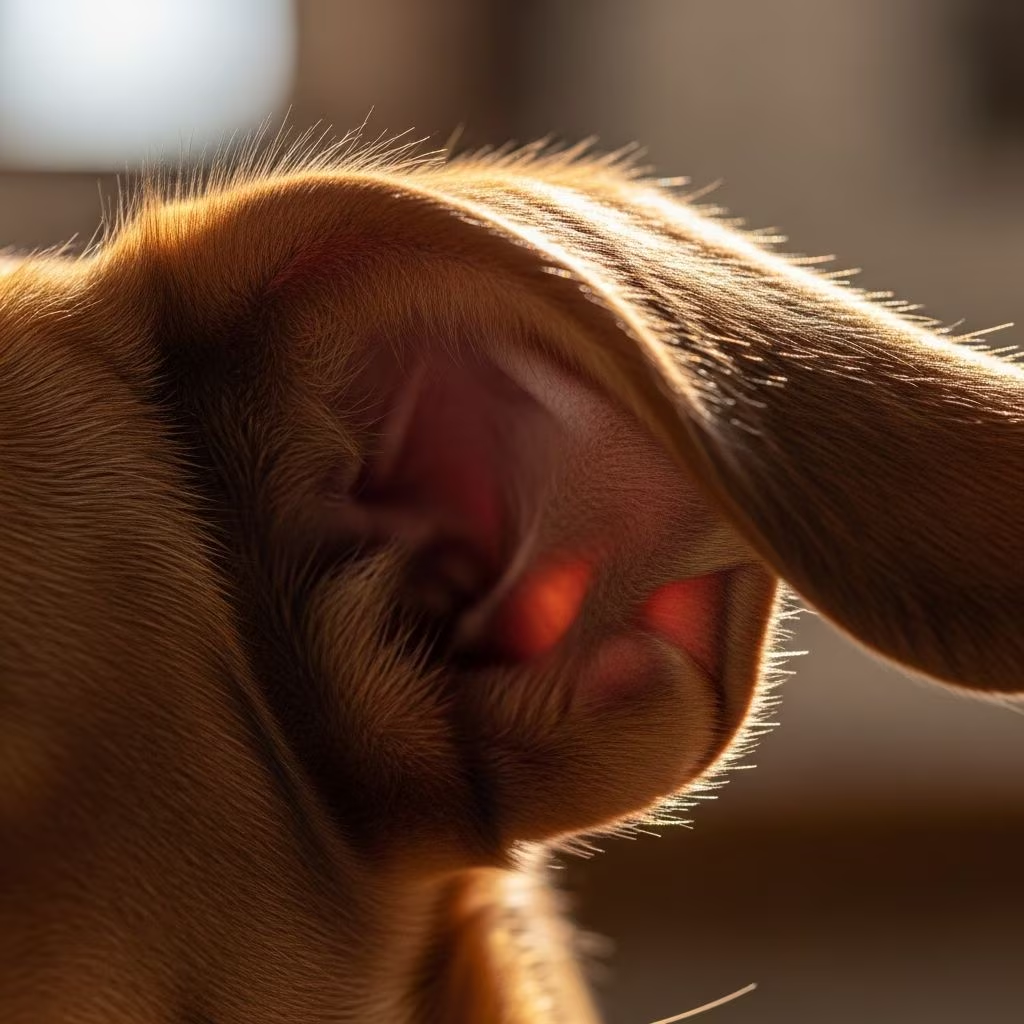
Dog ears are more than just adorable; they are finely tuned instruments for hearing, balance, and communication. Understanding how your dog’s ears work can help you read their body language better, spot problems earlier, and care for them more confidently.
Below are seven amazing facts about your dog’s ears, from their complex anatomy to the subtle ways they reveal what your pup is feeling.
1. Dog Ears Have a Three-Part, High‑Performance Anatomy
Like human ears, your dog’s ears are divided into three main parts: the outer ear, middle ear, and inner ear.
| Ear Part | Main Structures | Primary Functions |
|---|---|---|
| Outer ear | Pinna (ear flap), vertical and horizontal ear canal | Collects sound, funnels it toward the eardrum |
| Middle ear | Eardrum, three tiny bones (ossicles), air‑filled cavity | Amplifies and transmits sound vibrations |
| Inner ear | Cochlea, vestibular system | Converts sound to nerve signals and controls balance |
The outer ear includes the visible ear flap (pinna) and the ear canal, which in dogs is deeper than in humans and shaped like an “L” with a vertical and a horizontal portion. This design creates an efficient funnel that captures sound and directs it toward the eardrum.
The middle ear contains the eardrum and three tiny bones (malleus, incus, stapes) that transmit sound to the inner ear. These structures amplify subtle vibrations so they can be interpreted by the inner ear.
The inner ear houses the cochlea, responsible for hearing, and the vestibular system, which helps your dog maintain balance and detect head movement.
- Key takeaway: Your dog’s ear is a compact, three‑stage sound and balance system, not just a floppy flap.
2. Dogs Hear a Wider Range of Sounds Than Humans
Dogs are able to hear both quieter and higher‑pitched sounds than people. According to veterinary references, the average dog can detect sounds up to roughly four times farther away than the average human and at much higher frequencies.
- Humans typically hear up to around 20,000 Hz (cycles per second).
- Dogs can detect significantly higher frequencies, which helps explain their sensitivity to high‑pitched squeaks and distant noises.
This superior hearing is partly due to:
- The deep, L‑shaped ear canal, which funnels sound efficiently.
- A highly responsive middle ear that amplifies tiny vibrations.
- The sensitive cochlea in the inner ear, packed with cells that convert sound into nerve signals.
Because of this, noises that seem faint or unnoticeable to you—like a car door down the block or a mouse behind the wall—may be loud and clear to your dog.
- Key takeaway: Your dog’s hearing range is much broader than yours, so they often respond to sounds you never notice.
3. Ear Shape and Position Vary by Breed (and Affect Function)
From tall, pointed ears to long, floppy ones, dog ear shapes differ dramatically between breeds, but all share the same base anatomy.
Common ear types include:
- Prick ears: Stand upright (e.g., German Shepherds, Huskies).
- Drop or floppy ears: Hang down alongside the face (e.g., Basset Hounds, Cocker Spaniels).
- Semi‑prick ears: Partially erect with a tip that folds (e.g., Collies).
- Button or folded ears: Fold forward to cover the ear canal opening (e.g., some Terriers).
While shape is strongly influenced by genetics and breed standards, it may also impact ear health:
- Floppy ears can trap moisture and reduce airflow, potentially increasing the risk of outer ear infections.
- Hairy ear canals can hold wax and debris, especially in certain long‑haired or drop‑eared breeds.
- Open, erect ears often have better ventilation but may be more exposed to dust, seeds, or cold.
Regardless of ear type, the underlying outer, middle, and inner structures still perform the same essential hearing and balance functions.
- Key takeaway: Ear shape changes how your dog looks—and may influence ear‑care needs—but the core structure and function remain the same.
4. Dog Ears Are Built for Balance, Not Just Hearing
Inside your dog’s skull, the inner ear does double duty. While the cochlea processes sounds, nearby structures called the vestibular system are devoted to balance.
The vestibular system includes:
- Semicircular canals: Curved, fluid‑filled tubes that detect head rotation.
- Otolith organs: Structures that sense head position and linear movement (such as going up stairs).
When your dog moves, the fluid and tiny particles inside these structures shift, sending signals to the brain about direction, speed, and body position. This is how your dog can:
- Land on their feet after a jump.
- Keep steady when turning quickly.
- Walk confidently on uneven or slippery surfaces.
Because balance and hearing share the same inner‑ear space, certain ear disorders can cause both hearing changes and balance problems, such as head tilt, stumbling, or circling.
- Key takeaway: A healthy ear is critical not only for hearing you call, but also for helping your dog stay upright and coordinated.
5. Dogs Can Move Their Ears with Remarkable Precision
Dogs have more than a dozen distinct muscles controlling each ear, allowing them to tilt, rotate, raise, or flatten their ears independently.
These specialized muscles let your dog:
- Pinpoint sound direction by swiveling one or both ears toward a noise.
- Fine‑tune hearing by adjusting ear position to amplify or dampen sounds.
- Express emotion as part of their body language.
Independent ear movement means your dog can listen behind them with one ear while monitoring you with the other. That’s part of why they sometimes appear to “know” something is coming before you do.
- Key takeaway: Your dog’s ears are highly mobile tools, working constantly to locate sounds and express how they feel.
6. Ears Are Powerful Communication Tools
Beyond hearing, dog ears are essential to canine body language. Subtle changes in ear position can reveal what your dog is feeling long before they bark or growl.
Common ear positions and likely meanings include:
- Ears forward and alert: Focused, curious, or aroused (watching something interesting, hearing a new sound).
- Ears relaxed in natural position: Calm and comfortable.
- Ears slightly back: Mild uncertainty or appeasement, especially if paired with soft eyes and a loose body.
- Ears pinned back tightly: Fearful, anxious, or defensive, particularly with tense muscles or a tucked tail.
- One ear up, one ear down: Listening while unsure, distracted, or transitioning between emotional states.
Reading ear position along with tail carriage, facial expression, and overall posture helps you understand your dog’s emotional state and respond appropriately.
- Key takeaway: Watch your dog’s ears to gain early insight into whether they are relaxed, worried, or ready for action.
7. Regular Ear Care Helps Prevent Common Problems
Because the canine ear canal is deep and L‑shaped, moisture, wax, and debris can become trapped, especially in dogs with floppy or hairy ears. Many cases of otitis externa (outer ear infection) start here.
Basic at‑home care and observation can reduce the risk of problems and help you catch issues early.
Signs Your Dog’s Ears Need Attention
- Frequent head shaking or head tilting.
- Scratching at the ears or rubbing them against furniture or the floor.
- Redness, swelling, or heat inside the ear flap or entrance of the canal.
- Unpleasant odor from the ear.
- Discharge that may be brown, yellow, or bloody.
- Sensitivity or pain when ears are touched.
- Balance changes, stumbling, or a persistent head tilt.
If you see any of these signs, a veterinary exam is important. Many ear issues are treatable, but delaying care can allow infections to worsen or spread.
Everyday Ear‑Care Tips
Talk with your veterinarian about the right ear‑care routine for your dog’s breed, lifestyle, and health. General guidelines often include:
- Look inside the ears regularly. Check for redness, discharge, or swelling while you’re grooming or petting your dog.
- Use only vet‑recommended cleaners. Commercial canine ear‑cleaning solutions are designed to help remove wax and dry the canal; never use alcohol, hydrogen peroxide, or vinegar unless specifically directed by your vet.
- Wipe, don’t probe. Clean only the visible outer part of the ear canal with cotton pads or gauze; avoid cotton swabs that can push debris deeper or damage the eardrum.
- Dry ears after swimming or baths. Gently drying and, if advised by your vet, using a drying ear solution can help reduce moisture‑related infections in active or water‑loving dogs.
- Schedule veterinary checks. Routine exams allow your veterinarian to spot subtle ear changes and address underlying causes such as allergies or parasites.
- Key takeaway: A quick weekly ear check and occasional cleaning under veterinary guidance can significantly lower the risk of painful ear disease.
Frequently Asked Questions (FAQs)
Q: How often should I clean my dog’s ears?
A: Most dogs only need their ears cleaned occasionally, such as every few weeks or after swimming, but some breeds or dogs with allergies may need more frequent care. Always follow your veterinarian’s specific recommendations, since over‑cleaning can irritate the ear canal.
Q: Can I use cotton swabs to clean inside my dog’s ear canal?
A: No. Cotton swabs can push wax and debris deeper into the ear and may damage the eardrum. Veterinary sources recommend using soft cotton pads or gauze to clean only the parts of the ear you can see, along with a vet‑approved ear‑cleaning solution when needed.
Q: Why do some dogs get more ear infections than others?
A: Ear shape, allergies, underlying skin disease, moisture exposure, and ear canal hair can all increase the risk of infection. Dogs with floppy ears or chronic allergies, for example, often have less airflow and more inflammation in the ear canal, which can promote infection.
Q: Is head shaking always a sign of an ear problem?
A: Occasional head shaking can be normal, but frequent or intense shaking—especially with scratching, odor, discharge, or redness—often indicates irritation, infection, or a foreign body in the ear. A veterinary exam is recommended if shaking persists.
Q: Can ear problems affect my dog’s balance?
A: Yes. Because the inner ear contains the vestibular system that controls balance, disorders involving deeper parts of the ear may cause head tilt, stumbling, or difficulty standing or walking straight. Sudden balance changes should be treated as urgent and evaluated by a veterinarian.
References
- Ear Structure and Function in Dogs — Merck Veterinary Manual. 2020-10-01. https://www.merckvetmanual.com/dog-owners/ear-disorders-of-dogs/ear-structure-and-function-in-dogs
- All You Need To Know About The Dog Ear Anatomy — PetLab Co. 2022-03-15. https://thepetlabco.com/learn/dog/health-wellness/dog-ears
- Ear Anatomy 101: How Owners Can Help With Dog Ear Problems — Morris Animal Foundation. 2021-06-10. https://www.morrisanimalfoundation.org/article/otitis-externa-dogs
- Dog ear anatomy and examination — Bayside Mobile Vet / YouTube (Dr. Chris Gleeson). 2013-11-19. https://www.youtube.com/watch?v=TCoLZCTcBOo
- 1. Anatomy of the Ear — Veterinary Key / University of Tennessee. 2012-01-01. https://veteriankey.com/1-anatomy-of-the-ear/



