

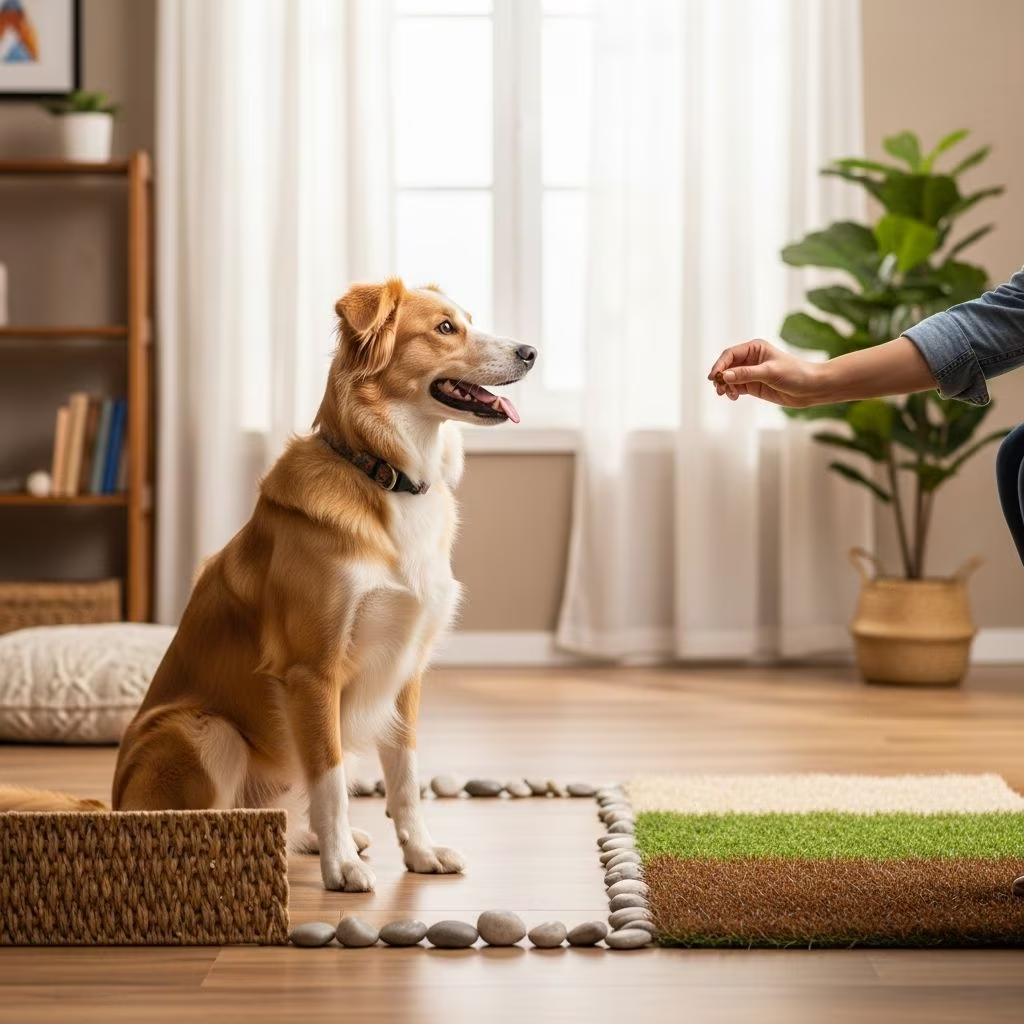
Many pet parents worry that setting rules for their dogs might feel harsh or controlling. In reality, clear, consistent boundaries can greatly increase a dog’s happiness, confidence, and sense of security. Well‑designed boundaries make life more predictable for your dog and easier for you, turning daily chaos into a calm, enjoyable routine for everyone.
Modern behavior science and veterinary guidelines emphasize that dogs learn best through clear expectations, consistency, and positive reinforcement rather than punishment.1 When boundaries are paired with rewards, you are not restricting your dog’s joy—you are giving them a safe, understandable framework in which to thrive.
What Are Boundaries for Dogs?
Boundaries are simply the rules and limits that shape how your dog behaves at home and in the world. They tell your dog what is allowed, what is not, and what earns good things like treats, play, or attention.
Common examples of healthy boundaries include:
- Not jumping on guests when they enter the home
- Waiting at the door instead of rushing outside
- Walking on a loose leash instead of lunging and pulling
- Resting calmly on a bed or mat during mealtimes
- Keeping paws off kitchen counters and tables
These limits are not about dominance or control. They are about safety, communication, and mutual comfort. When boundaries are taught with kindness, they help dogs understand what is expected and how to succeed.
Why Dogs Actually Like Boundaries
Dogs, like humans, feel more relaxed when the world is predictable. Studies on animal welfare indicate that animals experience less stress when they can anticipate what will happen and understand which behaviors lead to good outcomes.2 Random rules or inconsistent responses from humans create confusion. Clear boundaries, on the other hand, provide:
- Predictability – your dog learns that certain actions reliably lead to certain responses.
- Security – your dog knows you will guide and protect them in unfamiliar situations.
- Autonomy within limits – your dog can make choices, but within safe and reasonable guidelines.
When you consistently uphold boundaries, you are telling your dog, “You can trust what I say.” That trust is the foundation of every other aspect of your relationship.
6 Big Reasons to Set Boundaries for Your Dog
Below are six key ways that thoughtful boundaries improve both your dog’s life and your own.
1. Boundaries Strengthen Your Bond
Many people think love alone is enough to create a strong relationship with a dog. Affection is vital, but dogs also need clear guidance. When you calmly teach what is okay and what is not, you become a reliable leader in your dog’s world.
Boundaries strengthen your bond because they:
- Show your dog that you are paying attention to how they feel and what they need.
- Help your dog understand your cues and body language more clearly.
- Reduce the number of stressful or confusing situations you both encounter.
Research on the human–animal bond shows that shared routines and predictable interactions are linked to stronger, more secure relationships between people and pets.3 When your dog can count on you to be consistent, they often become more affectionate, relaxed, and engaged.
2. Boundaries Keep Everyone Safer
Safety is one of the most important reasons to set boundaries. Even the sweetest, calmest dog can react unpredictably if they feel trapped, frightened, or overwhelmed. Good boundaries reduce the chance that your dog will end up in dangerous situations or cause harm by accident.
Safety-focused boundaries might include:
- Teaching a solid recall (“come” cue) before allowing off‑leash time.
- Using a leash or long line near traffic, wildlife, or livestock.
- Preventing rough interactions with children who may not understand canine body language.
- Asking other dog guardians to give your dog space when needed.
Public health and veterinary guidance consistently highlight responsible supervision, leash use, and training as key components in preventing dog bites and injuries.4 When your dog knows and respects basic safety rules, outings become far less stressful, and you can both enjoy more freedom.
3. Boundaries Support Better Behavior and Training
Training is easier and faster when your dog understands that certain behaviors always lead to the same results. Behavior science calls this consistency of consequences. If jumping on the couch sometimes earns cuddles and sometimes earns a scolding, your dog learns to keep trying because the rule isn’t clear.
By contrast, when you set and follow through on boundaries:
- Your dog learns new behaviors more quickly.
- Unwanted behaviors fade because they never pay off.
- Frustration decreases for both you and your dog.
Positive reinforcement training, which rewards desirable behavior and manages or redirects unwanted behavior, is recommended by major veterinary and behavior organizations as the most effective and humane way to teach dogs.1 Boundaries fit naturally into this approach: you clearly define which behaviors will earn good things and which will not.
4. Boundaries Reduce Stress and Anxiety
Many behavior problems described as “stubbornness” or “bad attitude” are actually signs of stress, fear, or insecurity. When dogs don’t understand what is expected, or when their environment is chaotic, they may bark excessively, pace, chew, or overreact to small triggers.
Consistent boundaries can lower stress by:
- Creating predictable daily routines (meals, walks, rest, play).
- Limiting overwhelming situations, like nonstop rough play with other dogs.
- Giving your dog a designated safe space, such as a quiet room, crate, or bed.
- Helping your dog know when it is time to be active and when it is time to relax.
Animal welfare research shows that predictability and control are key factors in reducing chronic stress in animals.2 A boundary as simple as “when you lie on your mat, good things happen and nobody bothers you” can significantly improve a worried dog’s sense of security.
5. Boundaries Make Everyday Life Easier
Living with a dog should feel joyful, not exhausting. Without boundaries, common daily tasks can turn into battles: dragging your dog down the street, wrestling them away from visitors, or constantly shooing them off counters.
Thoughtful boundaries help by:
- Preventing chaos during high‑energy moments like door greetings.
- Making grooming, vet visits, and nail trims more manageable.
- Reducing household damage from chewing, digging, or counter‑surfing.
- Saving your time and energy so you can enjoy fun activities together.
The easier daily life feels, the more patience and empathy you are likely to have for your dog. In turn, your dog benefits from calmer, clearer communication instead of frustrated reactions.
6. Boundaries Help Your Dog Thrive Long‑Term
Good boundaries are not only about the present moment—they shape your dog’s long‑term wellbeing. Dogs that practice self‑control, understand basic cues, and feel safe with their humans are better prepared to handle life changes such as moves, new family members, or health issues.
Over time, consistent boundaries can:
- Increase your dog’s confidence in new environments.
- Improve their ability to settle and rest, which supports physical health.
- Lower the risk of serious behavior problems that might lead to rehoming.
- Strengthen the stability of your dog’s home and social relationships.
Studies on companion animals suggest that behavior issues are a major cause of relinquishment to shelters.5 Investing early in training and boundaries can dramatically reduce the likelihood that manageable behaviors grow into crises later in your dog’s life.
Healthy vs. Unhealthy Boundaries
Not all boundaries are helpful. Healthy boundaries are clear, compassionate, and realistic. Unhealthy boundaries may be too rigid, too harsh, or constantly changing.
| Healthy Boundaries | Unhealthy Boundaries |
|---|---|
| Use positive reinforcement and kind redirection. | Rely on fear, pain, or intimidation. |
| Are enforced consistently by everyone in the home. | Change often or depend on someone’s mood. |
| Respect your dog’s emotional and physical limits. | Ignore signs of fear, pain, or exhaustion. |
| Allow freedom within safe, reasonable limits. | Over‑control your dog, limiting all normal dog behaviors. |
How to Set Boundaries Kindly and Effectively
Setting boundaries does not have to be confrontational. Many can be established through simple routines, proactive planning, and calm communication.
Use Clear Visual and Environmental Cues
- Provide a dedicated resting spot (bed, mat, or crate) and reward your dog for using it.
- Use baby gates or closed doors to prevent access to unsafe areas.
- Keep tempting items (food on counters, shoes, trash) out of reach to set your dog up for success.
Communicate Calmly with Your Voice and Body Language
- Choose a small set of simple cues (“sit,” “stay,” “leave it,” “come”) and use them consistently.
- Speak in a steady, neutral tone rather than yelling or repeating cues rapidly.
- Reward even small steps in the right direction so your dog stays motivated to learn.
Respect Your Dog’s Own Boundaries
Boundaries are not one‑sided. Dogs have their own preferences and limits. Learning to read your dog’s body language—such as turning away, lip‑licking, yawning, or hiding—helps you avoid forcing interactions that make them uncomfortable.6
- Allow your dog to walk away from people or dogs they do not want to greet.
- Avoid hugging, restraining, or touching sensitive areas if your dog shows signs of stress.
- Teach children to ask before petting and to stop when the dog moves away.
When you honor your dog’s boundaries, they learn you are safe to be around and become more willing to cooperate when you do need to handle them for care or safety.
Frequently Asked Questions (FAQs)
Q: Will setting boundaries make my dog less happy?
No. When boundaries are taught with patience and rewards, they usually make dogs more relaxed and confident. Dogs benefit from predictable routines and clear expectations, which reduce confusion and stress.
Q: How early should I start setting boundaries for my puppy?
You can begin gentle boundaries as soon as your puppy comes home. Use short, positive training sessions, manage the environment to prevent mistakes, and reward desired behaviors. Early, kind guidance helps your puppy grow into a well‑adjusted adult.
Q: What if my dog gets upset when I introduce new rules?
It is normal for dogs to test new boundaries at first. Stay calm, be consistent, and reward alternative behaviors you like. If your dog shows signs of intense fear or frustration, consider working with a qualified, reward‑based trainer or behavior professional.
Q: Can I still let my dog on the furniture if I have boundaries?
Yes. Boundaries do not mean your dog can never enjoy the couch or bed. You might set a rule that your dog only gets on furniture when invited, or that they must get off when asked. The key is consistency so your dog understands the rule.
Q: How do I handle family members who do not follow the same rules?
Talk together about why boundaries matter for safety and harmony at home. Choose a small number of simple, non‑negotiable rules and agree to enforce them the same way. If everyone responds differently, your dog will stay confused and progress will be slower.
References
- AVSAB Position Statement on Humane Dog Training — American Veterinary Society of Animal Behavior. 2021-10-15. https://avsab.org/resources/position-statements/
- Environmental Enrichment for Companion Animals — American Veterinary Medical Association. 2021-06-01. https://www.avma.org/resources-tools/avma-policies/environmental-enrichment-companion-animals
- Bonding with your pet: How building a strong relationship benefits both of you — American Veterinary Medical Association. 2019-02-01. https://www.avma.org/resources/pet-owners/petcare/bonding-your-pet
- Dog Bite Prevention — Centers for Disease Control and Prevention. 2020-05-08. https://www.cdc.gov/dog-bites/about/index.html
- Risk factors for dog relinquishment to a Los Angeles municipal animal shelter — Patronek GJ et al., Journal of the American Veterinary Medical Association. 1996-08-15. https://avmajournals.avma.org/view/journals/javma/209/3/javma.1996.209.572.xml
- How to Read Dog Body Language — American Society for the Prevention of Cruelty to Animals (ASPCA). 2022-03-10. https://www.aspca.org/pet-care/dog-care/common-dog-behavior-issues



