

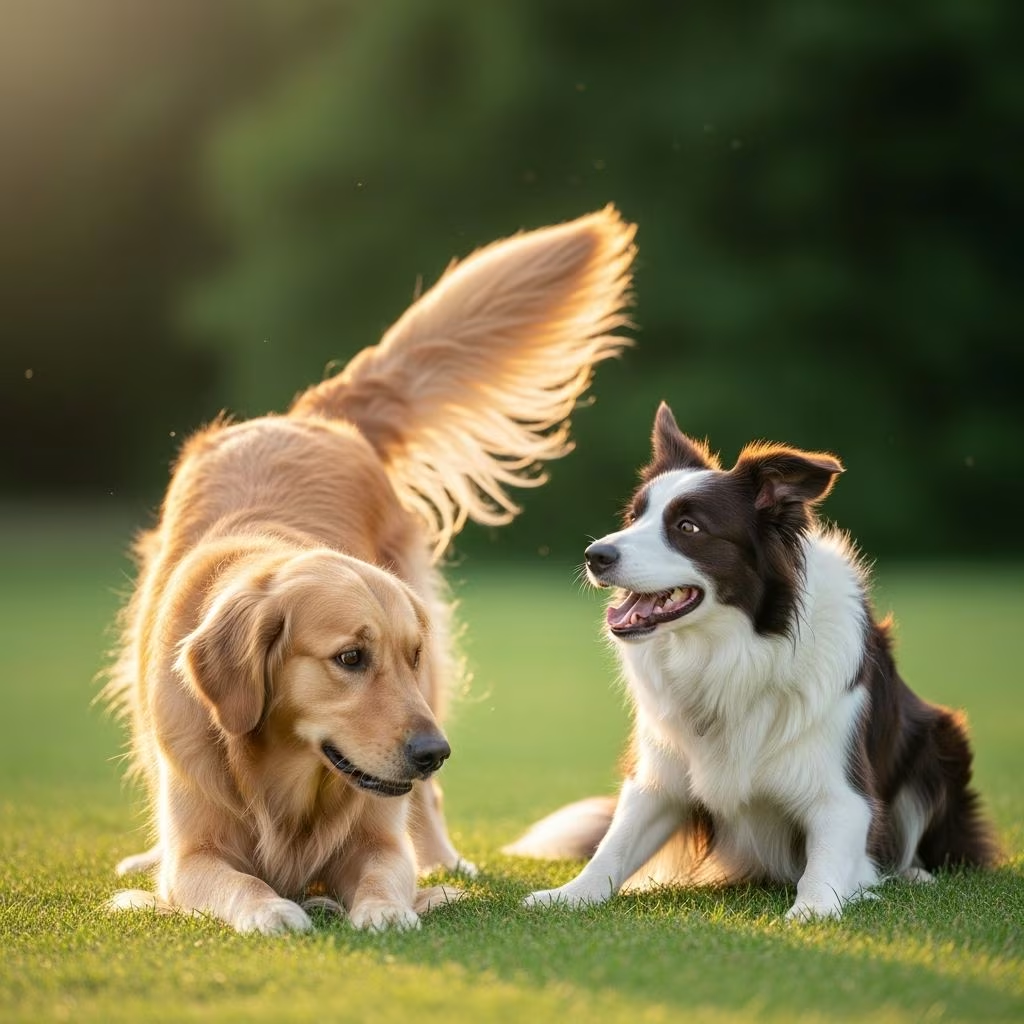
Dogs rarely use words, but they have a rich vocabulary of play signals that tell other dogs (and people) when they are ready for fun. Learning to read these signals helps you distinguish normal play from real conflict and makes you a more confident, safety‑minded dog guardian.
This guide explores six common dog play signals, what they look like, what they mean, and how you can respond to keep interactions relaxed, enjoyable, and safe.
What Are Dog Play Signals?
Play signals are body movements, postures, and actions that dogs use to invite play, keep play going, or reassure a partner that their intentions are friendly. These signals are part of normal canine communication and appear across breeds and ages.
Researchers describe play as a structured social activity where dogs use exaggerated, bouncy, and non-serious versions of behaviors that can also occur in aggression or hunting, such as chasing or biting, but with clear signals that it is just a game.
- They help dogs avoid misunderstandings.
- They allow rough or contact-heavy play to stay friendly.
- They give hesitant or shy dogs reassurance that play is safe.
- They allow playmates to pause, reset, or change the game.
As you observe your dog at the park, in daycare, or at home, look for these signals before and during play. They are your best clues that your dog is enjoying the interaction.
Dog Play Signal #1: The Play Bow
The play bow is the best-known and most universal play signal in dogs. It is so distinctive that many behavior experts consider it the clearest canine way to say, “Let’s play!”
What a Play Bow Looks Like
- Front legs bent, elbows and chest low to the ground.
- Rear end up in the air, hind legs straight or slightly bent.
- Tail usually high or level, often wagging broadly.
- Body loose and curved, not stiff.
- Mouth open and relaxed, sometimes with a “grinning” expression.
Dogs use the play bow:
- At the start of play to invite a chase or wrestling game.
- Between bursts of play to “reset” and reassure a partner after rough contact.
- To encourage a shyer dog to join in by showing friendly intent.
How You Can Respond
- Mirror the bow with a human version: bend your knees, lower your upper body, and spread your arms wide.
- Toss a toy, start a short chase, or gently run away to encourage a game.
- Use this signal in training and enrichment sessions to make play part of your daily routine.
| Play Bow | Versus Warning Posture |
|---|---|
| Loose, bouncy, tail wagging, weight balanced | Stiff legs, weight forward, tail high and rigid |
| Open, relaxed mouth; soft eyes | Closed mouth, hard stare, tense jaw |
| Often followed by chase or silly movements | Often followed by growl, lunge, or snap |
Dog Play Signal #2: Gently Biting the Front Paw
To humans, a dog biting another dog’s leg can look alarming. In many cases, though, a soft nibble at the front paw is a normal, friendly play signal.
What Gentle Paw Biting Looks Like
- Dog reaches forward and lightly closes their mouth around the other dog’s front paw or foreleg.
- Pressure is controlled and inhibited: no yelp, no flinch, no damage.
- Often followed by bouncing away, bowing, or rolling over.
- Both dogs stay loose, with wiggly bodies and wagging tails.
What It Usually Means
- An invitation to start a wrestling or chasing game.
- A bid to restart play after a brief pause.
- A polite way to say, “Notice me, let’s do something fun.”
If the other dog responds by mouthing back, bowing, or chasing, and both remain relaxed, you are likely watching normal play. If the recipient stiffens, tucks their tail, or tries to escape, it may be time to pause the interaction.
Dog Play Signal #3: Batting with a Paw
Some dogs are natural “boxers.” They use their front paws to bat at a playmate’s shoulders, chest, or face to invite interaction.
What Paw Batting Looks Like
- Quick, rhythmic taps or swats with one or both front paws.
- Often directed at the other dog’s shoulder, side of the neck, or face.
- Body remains bouncy and curved, not stiff or leaning aggressively.
- May be combined with play bows, spins, or short chases.
Common Play Patterns After Paw Batting
- Wrestling: Dogs lean into each other, mouth, and roll around on the ground.
- Face play: Gentle mouthing around the cheeks, ears, or neck.
- Body slams: Larger dogs may bump shoulders or hips in a loose, bouncy manner.
Not all dogs use paw batting. Some breeds or individuals rely more on chasing or play bows, while others, especially those with a history of using their front limbs (like some working or guardian breeds), play with more paw emphasis.
Dog Play Signal #4: Rolling Over in a Playful Way
Rolling onto the back is not always a sign of submission or fear. In play, dogs often roll over in a specific, exaggerated way to keep the game going or to self-handicap.
What Playful Rolling Over Looks Like
- Dog lowers their body and twists so one shoulder hits the ground first.
- They end up briefly belly-up, often right next to the other dog’s head or chest.
- They may bat their paws at the partner’s face.
- They may give soft, inhibited bites to the other dog’s paws or muzzle.
- They pop back up and immediately re-engage in play.
Why Dogs Roll Over During Play
- To invite a wrestling game where they play from the ground.
- To self-handicap, especially if they are bigger or stronger, making the game fairer.
- To change positions and keep the play style varied.
True fear or appeasement rolling looks different: the dog may stay flat, avoid eye contact, and keep the tail tucked tightly. In playful rolling, the dog remains animated and readily jumps back into action.
Dog Play Signal #5: Starting a Playful Chase
Chasing can be part of both healthy play and serious aggression. A key difference is that in play, the chase is often used as a signal to start or maintain a game, not a serious attempt to catch and harm.
Signs of Playful Chase
- Loose, springy movement rather than a flat-out sprint.
- Dogs may run in circles or figure eights around each other.
- They often switch roles: the chaser becomes the chased.
- Short pauses where both dogs stop, bow, or bounce before running again.
A dog may start play simply by dashing away or toward another dog and then veering off with a play bow. When the other dog responds with similar body language, this is usually friendly play. If one dog looks overwhelmed and cannot escape, or if there is no role reversal, you may need to step in.
Dog Play Signal #6: Open, Relaxed Mouth and “Play Face”
Dogs also use facial expressions as play signals. An open, relaxed mouth combined with soft eyes and a loose face is often called a “play face.”
Typical Play Face Features
- Mouth open, tongue possibly lolling out.
- Lips relaxed, not pulled tight or back in a snarl.
- Eyes soft or squinty rather than hard and fixed.
- Often accompanied by loose, wiggly body movements.
In this state, some dogs may growl or bark. A play growl generally sounds lower and continuous but is paired with bouncy movements, wagging tails, and other playful signals. Always interpret sounds in the context of the whole body, not in isolation.
How to Tell Play From Aggression
Because dogs use chasing, pinning, mounting, and mouthing both in play and in serious conflict, it is important to look at the whole picture. Experts recommend focusing on patterns, reciprocity, and body looseness.
Signs You Are Watching Healthy Play
- Both dogs take turns being on top or being the chaser.
- Bodies are loose, curved, and bouncy, not stiff or straight.
- You see frequent play signals: bows, pauses, shakes, and role reversals.
- When one dog pauses or tries to leave, the other can respect that pause within a moment.
- Noise (barks, growls) is paired with wiggly movement, not frozen tension.
Red Flags That Play Might Be Turning Problematic
- One dog chases and the other never gets to chase back.
- Stiff bodies, slow or no play bows, hard stares.
- Hackles raised, tail carried very high and tight.
- Yelping, repeated attempts to hide or escape, or running to a person for help.
- No brief pauses or resets; play becomes relentless and intense.
When in doubt, calmly interrupt with a cheerful recall, a brief leash break, or a short time-out to allow arousal to come down.
How You Can Support Safe, Happy Play
Your role as a guardian is to recognize play signals, respect your dog’s comfort level, and step in early if needed. Behavior and welfare organizations emphasize active supervision during off-leash dog-dog interactions.
Practical Tips for Dog Owners
- Observe new playmates carefully for 1–2 minutes before letting play escalate.
- Look for mutual play signals: both dogs bow, chase, and pause.
- Call dogs apart frequently for brief breaks and reward them for checking in with you.
- Separate dogs that show persistent stiffness, bullying, or signs of fear.
- Avoid overcrowded spaces where dogs cannot move away if they feel overwhelmed.
Frequently Asked Questions (FAQs)
Q: Is rough play between dogs always okay if they are using play signals?
A: Not always. Even if dogs are sending clear play signals, large size or strength differences, limited space, or a more timid dog can make rough play unsafe. Watch for reciprocity, voluntary engagement from both dogs, and the ability to take breaks.
Q: My dog growls when playing. Should I stop the game?
A: Growling in play can be normal if it comes with loose, bouncy body language, wagging tails, and frequent play signals like bows or pauses. If the growl is paired with stiffness, hard staring, or attempts to get away, calmly interrupt and reassess the interaction.
Q: Can people use play signals with their dogs?
A: Yes. Many dogs respond enthusiastically when humans mimic a play bow by bending their knees and lowering their upper body. You can also use exaggerated, bouncy movements, happy vocal tones, and toy tosses to invite play, while still respecting your dog’s comfort and energy levels.
Q: How can I help a shy dog feel safer during play?
A: Choose calm, well-socialized play partners, use small controlled spaces, and keep early sessions short. Watch for subtle stress signals like lip licking, turning away, or retreating to you, and give your dog breaks whenever they ask for one. Building confidence gradually is better than forcing long, intense play sessions.
Q: When should I seek professional help about my dog’s play behavior?
A: Consult a veterinarian or a qualified behavior professional if your dog frequently starts fights, seems unable to calm down during play, shows sudden changes in play style, or appears fearful or shut down during social interactions. Pain or medical issues can also affect play, so a health check is often a useful first step.
References
- Normal and Problematic Play in Dogs — American Veterinary Society of Animal Behavior (AVSAB). 2023-02-01. https://avsab.org/wp-content/uploads/2023/02/Normal-and-Problematic-Play-in-Dogs.pdf
- Teaching Polite Play — IAABC Foundation Journal. 2018-04-01. https://journal.iaabcfoundation.org/teaching-polite-play/
- 5 Key Signs of Canine Body Language in Group Play — Pawparazzi Resort & Spa. 2021-06-15. https://pawparazziresort.com/canine-body-language-group-play/
- Dog Park Behavior Guide: Group Play Dynamics and Safety — Wagbar. 2022-05-20. https://www.wagbar.com/dog-park-behavior-guide-group-play-dynamics-and-safety
- How to Read Dog Body Language — American Kennel Club. 2021-11-17. https://www.akc.org/expert-advice/training/how-to-read-dog-body-language/
- A Comprehensive Guide to Dog Body Signals — Capitol Training & Behavior. 2020-09-10. https://capitoltrainingandbehavior.com/guide-to-dog-body-signals/



