

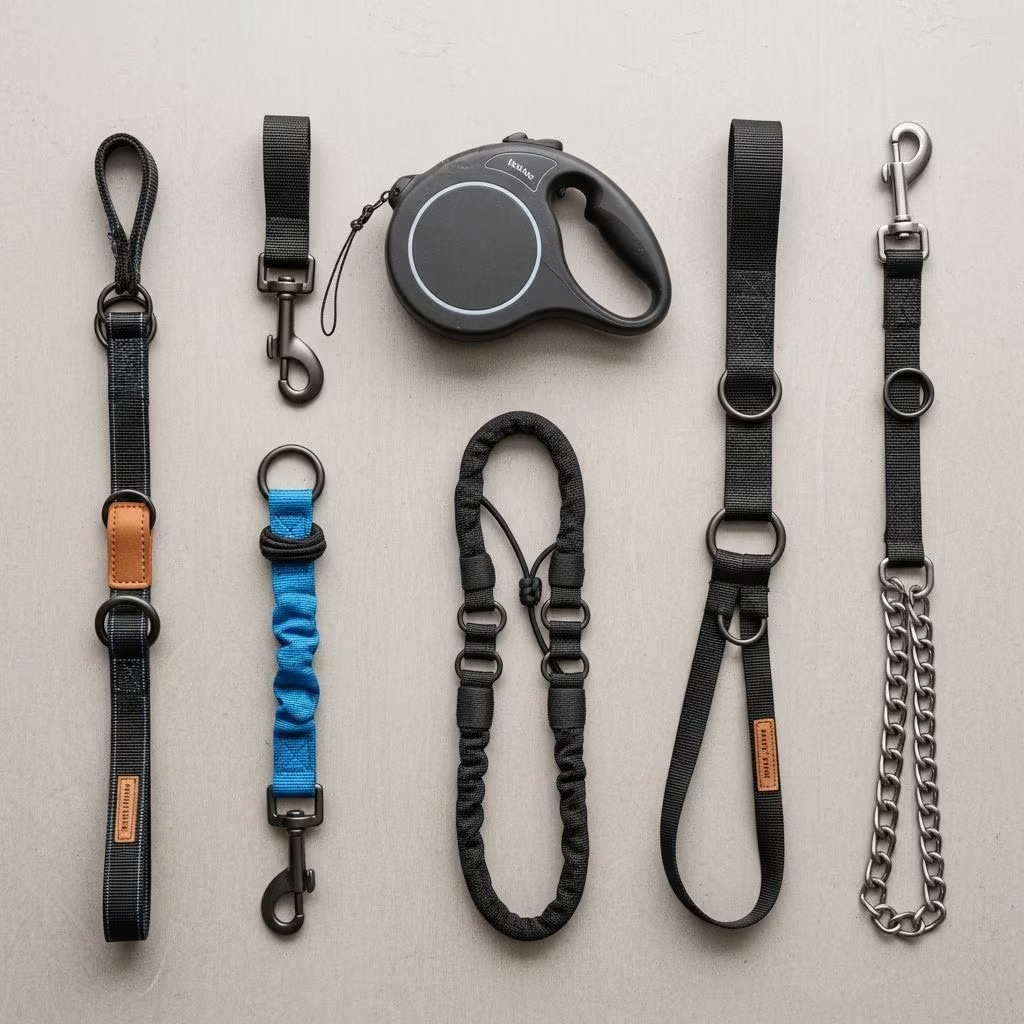
6 Dog Leash Styles and Their Functions: A Complete Guide
Choosing the right dog leash is one of the most important decisions you’ll make as a pet owner. Whether you’re walking through busy city streets, enjoying a peaceful neighborhood stroll, or training your dog, having the appropriate leash can make all the difference in ensuring safety, comfort, and enjoyment for both you and your furry companion. With so many options available on the market today, understanding the different leash styles and their specific functions will help you make an informed decision that suits your dog’s individual needs.
A good leash serves multiple purposes: it provides control, ensures safety in unpredictable situations, allows for proper training, and gives your dog the freedom to explore while remaining secure. The right leash choice depends on several factors, including your dog’s size and strength, temperament, training level, and the environments where you’ll be walking. Let’s explore the six most common dog leash styles and discover how each one functions to meet different pet parenting needs.
1. Standard Flat Leashes: The Classic Choice
The standard flat leash is the most recognizable and widely used leash type among dog owners. These leashes typically measure between 4 to 6 feet in length, though they can be found in various sizes to accommodate different situations and preferences. Most standard flat leashes are constructed from durable nylon weave material, making them lightweight yet strong enough to handle most dogs.
One of the greatest advantages of standard flat leashes is their versatility and affordability. These leashes are inexpensive compared to specialized alternatives, making them accessible to all dog owners. Additionally, they offer excellent durability, are waterproof, and can be easily washed and maintained. Standard flat leashes provide direct, reliable control over your dog, which is particularly valuable when walking in traffic or crowded areas with multiple distractions.
Best for: Everyday walking, neighborhood strolls, training sessions, and urban environments where close control is necessary. Many dog owners recommend starting with a 4-foot leash for maximum control, gradually increasing length as your dog matures and demonstrates better leash manners.
Material varieties: While traditional flat nylon remains popular, modern standard leashes are increasingly available in round, rope-like materials that offer enhanced grip and comfort for the handler.
2. Chain Leashes: Heavy-Duty Control
Chain leashes feature a nylon or leather handle attached to a chain component that comes in various thicknesses. This style is specifically designed for dogs who are aggressive chewers, as the chain material cannot be destroyed or damaged by even the most determined gnawing.
Chain leashes offer exceptional durability and zero-give feedback, providing handlers with precise control and immediate response. The chain construction makes them resistant to wear and tear, and they serve multiple functions beyond standard walking. From a heavy-duty appearance that projects strength and control to more elegant, thin chains that offer a luxurious aesthetic, chain leashes cater to various preferences and dog personalities.
Key benefits:
- Impossible for dogs to chew through or damage
- Offers superior durability and long-lasting use
- Provides excellent control for strong pullers
- Zero flexibility means direct feedback to your dog
- Suitable for training and behavioral correction
Best for: Dogs with strong chewing habits, powerful breeds requiring substantial control, and situations where maximum durability is essential.
3. Retractable Leashes: Freedom and Flexibility
Retractable leashes represent a significant departure from traditional fixed-length options. These leashes contain a nylon tape or cord housed within a plastic handle mechanism that allows you to extend the leash length—sometimes up to 30 feet—and then retract it as needed. The handle typically includes a lock button, enabling you to control the extension length at any moment.
The primary advantage of retractable leashes is the extensive freedom they provide your dog while maintaining a connection and basic control. These leashes are ideal for open spaces where your dog can safely explore and play while remaining tethered to you. However, it’s important to understand their limitations. Retractable leashes are notably ineffective in controlled environments such as busy streets, crowded parks, or areas with multiple other dogs, as the extended length and continuous tension make quick, precise responses difficult.
Considerations:
- Best used in open, safe spaces away from traffic
- Requires training for dogs to respond quickly
- The extended cord can tangle or become problematic
- Not suitable for leash training or obedience work
- May encourage pulling behavior in some dogs
Best for: Open fields, quiet parks, and situations where your dog can safely have maximum freedom to roam and explore.
4. Long Line Leashes: Training and Freedom
Similar in concept to retractable leashes, long line leashes are made from nylon material and provide your dog with substantial freedom to move around. The critical difference is that long line leashes don’t extend based on your dog’s pulling—instead, the handler deliberately lets out or loops back the leash as needed.
Long line leashes typically range between 5 to 20 meters in length, offering dogs considerable freedom while maintaining handler control. This style is particularly valuable for training purposes, allowing your dog to practice recall, come commands, and fetch exercises in open environments. Long line leashes should always be attached to a chest harness rather than a collar to ensure maximum comfort and safety for your dog.
Advantages of long line leashes:
- Excellent for recall and training exercises
- Allows dogs freedom while maintaining safety
- Handler controls the length, not the dog’s pulling
- Suitable for tracking and scent work training
- Provides more precise control than retractable leashes
Best for: Obedience training, recall practice, field work, and supervised outdoor exploration in safe, open areas.
5. Hands-Free Leashes: Walking Comfort and Convenience
Hands-free leashes represent an innovative solution for pet owners seeking a more comfortable and convenient walking experience. These leashes feature an adjustable loop that wraps around the handler’s waist, while the opposite end connects to the dog’s collar or harness. This design allows you to walk or even jog without holding a leash in your hands.
Hands-free leashes come in various configurations, with bungee and waist lead variants being the most popular among working dog handlers and active pet owners. Bungee leashes, in particular, incorporate rubber woven into the leash core, creating a shock-absorbing effect when your dog pulls or lunges forward—making them ideal for active walks, running, or hands-free training situations. These leashes are often connected to specialized training belts or tactical belts for secure, comfortable attachment.
Benefits of hands-free leashes:
- Free your hands for activities or carrying items
- Distribute pulling force across your waist instead of your arm
- Ideal for runners, joggers, and active pet parents
- Provides stability and balance during walks
- Some models reduce strain on shoulders and back
Best for: Running, jogging, hiking, and active lifestyles where hands-free convenience is beneficial. Also excellent for pet owners seeking ergonomic comfort during extended walks.
6. Adjustable Leashes: Versatility for Every Situation
Adjustable leashes represent one of the most popular and versatile leash options available today, serving as bestsellers among various leash types due to their remarkable flexibility. These leashes can be extended from approximately 1.2 to 2.5 meters and adjusted gradually in length to suit different situations. Some premium variants extend from 1.8 to 3 meters, providing even greater range.
The versatility of adjustable leashes extends beyond just the leash length—the hand loop is also flexible and can be extended comfortably around your shoulder, providing additional comfort during extended walks. Perhaps most importantly, adjustable leashes can be used as either hand-held or hands-free options, and you can even clip them around something stationary like a picnic table leg or playground bench, effectively creating a secure tether for your dog.
This multifunctional design makes adjustable leashes perfect for everyday life, adapting to various activities and circumstances. Standard leash length for most situations is around 2 to 2.3 meters, suitable for daily walks and typical situations. However, the ability to adjust beyond or below this length means you’re always prepared for whatever scenario arises.
Versatile uses for adjustable leashes:
- Standard walks in neighborhoods or urban areas
- Extended length for open park exploration
- Shortened for crowded or high-traffic situations
- Securing to stationary objects for outdoor dining or events
- Hands-free configuration for active pet parents
- Training sessions requiring variable distances
Best for: Pet owners seeking one versatile leash that adapts to multiple situations and lifestyles. Ideal for those wanting maximum flexibility without purchasing multiple specialized leashes.
Comparison Table: Dog Leash Styles at a Glance
| Leash Type | Length Range | Best Uses | Control Level |
|---|---|---|---|
| Standard Flat | 4-6 feet | Urban walks, training, crowded areas | High |
| Chain | Variable | Heavy chewers, strong pullers | Maximum |
| Retractable | Up to 30 feet | Open fields, parks, exploration | Low |
| Long Line | 5-20 meters | Training, recall practice, field work | Medium-High |
| Hands-Free | Variable | Running, hiking, active lifestyles | Medium |
| Adjustable | 1.2-3 meters | Multiple situations, everyday use | Medium-High |
Choosing the Right Leash for Your Dog
Selecting the appropriate leash depends on several personal factors unique to your dog and lifestyle. Consider your dog’s size and strength when evaluating which leash provides adequate control. A small dog may do fine with a standard flat leash, while a large, powerful breed might benefit from a chain leash or hands-free system that distributes pulling force more effectively.
Your dog’s temperament and training level also matter significantly. Well-trained dogs respond well to various leash styles, while dogs still learning proper leash manners benefit most from standard flat leashes that provide direct control and immediate feedback. The environments where you typically walk your dog should also influence your choice—urban walkers need different solutions than those exploring open fields.
Budget considerations are valid as well. Standard flat leashes offer excellent value, while specialized options like hands-free or adjustable leashes command higher prices but provide greater versatility. Many experienced pet owners maintain multiple leashes for different situations rather than relying on a single option.
Frequently Asked Questions
Q: What length leash is best for everyday walking?
A: The standard length for most everyday walks is 4 to 6 feet for standard leashes, or around 2 to 2.3 meters for general use. This provides good control while allowing reasonable freedom. Start with 4 feet for maximum control, increasing length as your dog demonstrates better leash manners.
Q: Are retractable leashes safe for all dogs?
A: Retractable leashes work best in open, safe areas away from traffic and other dogs. They’re not recommended for urban environments, crowded areas, or dogs still learning proper leash behavior. They can encourage pulling and don’t provide the quick control needed in potentially dangerous situations.
Q: Can I use a hands-free leash for training?
A: Yes, hands-free leashes, particularly bungee varieties, are excellent for certain training scenarios. They work well for active training, agility work, and developing increased intensity. However, standard flat leashes remain superior for basic obedience training requiring precise control and immediate feedback.
Q: What should I do if my dog is a heavy chewer?
A: Chain leashes are specifically designed for heavy chewers since the chain material cannot be destroyed. These leashes provide durability and reliability even with the most determined chewing dogs.
Q: Is one leash sufficient, or should I have multiple options?
A: Many pet owners benefit from maintaining multiple leashes for different situations. A standard flat leash for daily walks, a retractable leash for open spaces, and potentially a hands-free option for active pursuits provide flexibility for varying circumstances.
Q: What’s the difference between a long line and a retractable leash?
A: The key difference is control mechanism. Retractable leashes extend based on your dog’s pulling, while long lines extend at the handler’s discretion. Long lines provide more precise control for training and should be attached to a chest harness rather than a collar.
Q: Can adjustable leashes really serve multiple functions?
A: Yes, adjustable leashes are remarkably versatile. They can be shortened for control, extended for freedom, used as hands-free options, or even secured to stationary objects. This makes them excellent all-purpose choices for many pet owners.
References
- Choosing the Right Dog Leash — American Kennel Club. 2024. https://www.akc.org/expert-advice/lifestyle/choosing-right-dog-leash/
- The Different Types of Dog Leashes and How to Use Them — Holiday Barn Pet Resorts. 2024. https://holidaybarn.com/blog/types-of-dog-leashes-and-how-to-use-them/
- Best Dog Leashes, Leads & Lines: The Ultimate Dog Trainer’s Guide — Ray Allen Tactical Equipment. 2024. https://www.rayallen.com/the-ultimate-guide-to-best-dog-leash-leads-lines-for-k9-working-dogs
- Dog Leash Guide — Sprenger. 2024. https://www.sprenger.de/en/blogs/magazin/guide-to-dog-leads
- Guide to Dog Leashes: Which Leash Is Best for My Dog? — CLOUD7. 2024. https://cloud7.de/en/blogs/magazine/guide-dog-leash
- Which Leash Suits Which Dog? — FOUR PAWS International. 2024. https://www.four-paws.org/our-stories/publications-guides/which-leash-suits-which-dog



