

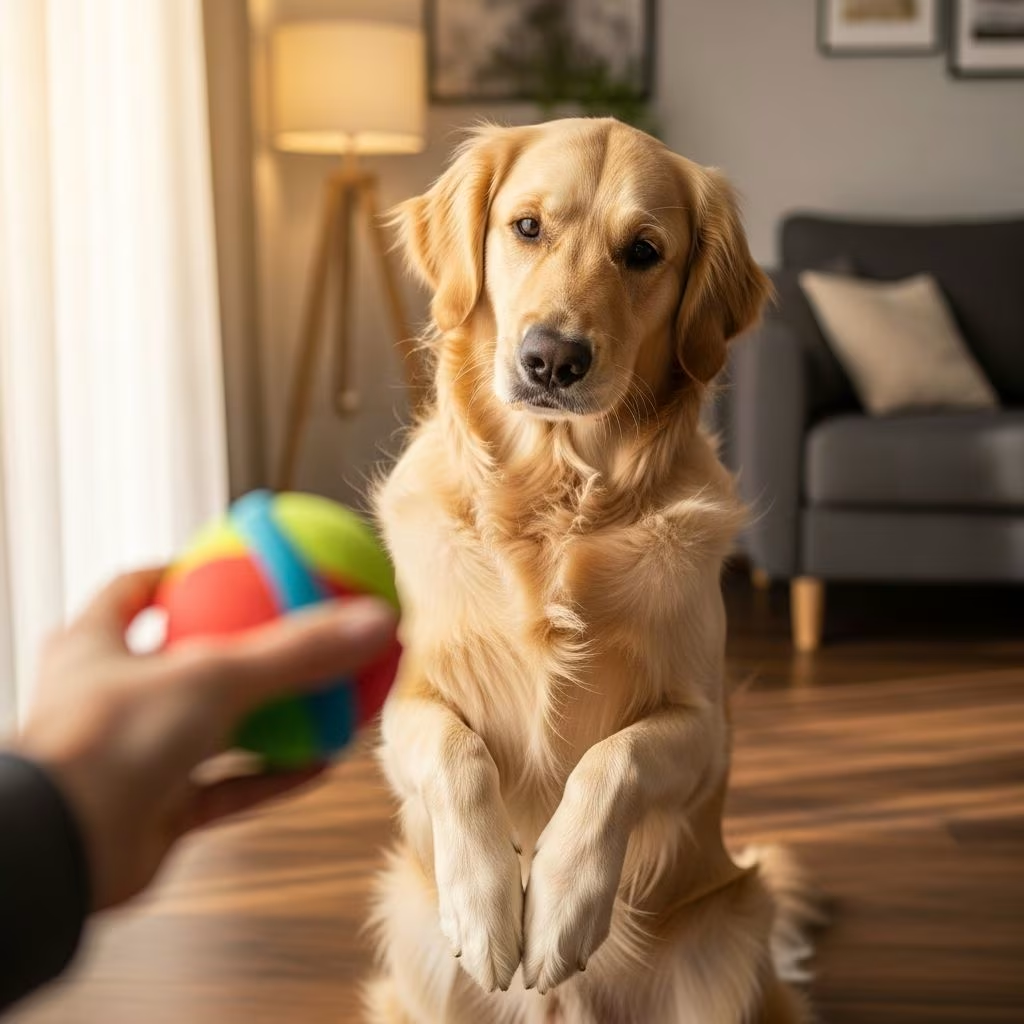
Why Your Dog Doesn’t Pay Attention: Understanding the Root Causes
If you’re frustrated because your dog seems to ignore you no matter what you do, you’re not alone. Many dog owners struggle with getting their pet’s attention, especially in distracting environments. The good news is that there are usually specific reasons behind this behavior, and understanding them is the first step toward improvement. Dogs aren’t being deliberately difficult or stubborn—they’re responding to their environment and training in ways that make sense to them. By identifying the underlying cause of your dog’s inattention, you can implement targeted training strategies that will help your furry friend become a better listener.
1. You Aren’t Fun Enough
One of the most common reasons your dog doesn’t pay attention is simply that you’ve become less interesting than their surroundings. If your dog isn’t listening, they may have learned that there are greater rewards in ignoring you than in responding to you. A squirrel running across the yard, the scent of grass to explore, or the excitement of another dog nearby can all seem far more rewarding than whatever you’re offering.
The reality is that from your dog’s perspective, they’re making a logical choice. If the environment provides more stimulation or reward than your commands, your dog will naturally choose to focus on the environment. To combat this, you need to become the most interesting thing in your dog’s world.
How to Make Training More Engaging:
- Use high-value treats that your dog absolutely loves—not the same old kibble
- Incorporate toys and play into training sessions to increase enthusiasm
- Vary your training location and activities to keep things fresh
- Use enthusiastic praise and genuine excitement when your dog responds correctly
- Make training feel like a game rather than a chore
- Practice during times when your dog is naturally more attentive
- Reward not just compliance, but also voluntary attention to you
When you become the most rewarding thing in your dog’s environment, they’ll naturally want to pay attention to you. This is especially important in highly distracting situations where competing stimuli are strongest.
2. Fear of Punishment
Another significant reason your dog may not be listening is if they’ve learned to associate your commands or corrections with something negative or frightening. Dogs are incredibly perceptive and can quickly develop anxiety or avoidance behaviors if they’ve experienced punishment or harsh corrections. This fear-based response can make your dog reluctant to approach you or respond to your cues, even when you’re trying to call them back.
A classic example of how punishment backfires: your dog escapes out the front door and leads you on an hour-long chase through the neighborhood. When your dog finally returns home or allows themselves to be caught, you punish them out of frustration. Unfortunately, your dog will associate that correction with the last action they took—coming back to you. This creates a paradoxical situation where you’ve actually punished the behavior you wanted to encourage.
Building Trust Instead of Fear:
- Always use positive reinforcement rather than punishment-based methods
- Reward your dog for coming to you, even if they’ve misbehaved previously
- Avoid yelling, hitting, or using intimidation tactics
- Stay calm and patient during training sessions
- Redirect unwanted behavior to desired behavior instead of punishing
- Create a safe space where your dog feels secure approaching you
- Use gentle corrections only when absolutely necessary, and pair with immediate rewards for correct behavior
When your dog trusts that being near you is always a positive experience, they’ll be much more willing to pay attention and respond to your commands. Fear-based training erodes this trust and makes attention problems worse.
3. Dog Requires (More) Training
Sometimes the issue isn’t motivation or fear—it’s simply that your dog hasn’t received adequate training or doesn’t fully understand what you’re asking of them. Dogs want to do the right thing, but they need to be taught clearly and consistently. If you think your dog is being difficult or stubborn, consider whether they actually understand the command you’re giving them.
Many dog owners assume their dogs know what they mean, but dogs don’t naturally understand human language. Each command must be explicitly taught and reinforced repeatedly in various contexts. Without formal training or consistent practice, your dog simply may not have the skills necessary to comply with your requests.
Proper Training Approaches:
- Enroll in a group obedience class with a certified trainer
- Work with a professional private dog trainer for personalized guidance
- Read books and articles about positive reinforcement training methods
- Break commands down into smaller, achievable steps
- Teach one command thoroughly before moving to the next
- Practice commands in multiple locations and situations
- Use consistent verbal cues and hand signals
Professional trainers can assess your dog’s current skill level and create a training plan tailored to your specific needs. They can also help you understand how to communicate more clearly with your dog and identify any training gaps.
4. Your Dog Is Overstimulated or Anxious
While the original article focuses on specific reasons dogs don’t pay attention, it’s important to consider that environmental factors play a crucial role. A dog who is overstimulated, anxious, or in a high-stress situation may be physically unable to focus on you, regardless of motivation or training. When dogs are in a heightened state of arousal or fear, their ability to learn and respond is significantly compromised.
Recognizing Signs of Overstimulation:
- Excessive panting or drooling
- Rapid movements and inability to settle
- Avoidance behaviors or trying to escape
- Ears pinned back or tail between legs
- Jumping or erratic behavior
- Difficulty focusing on your voice or commands
In these situations, the best approach is to remove your dog from the overstimulating environment and allow them to calm down before attempting training. Trying to train an anxious or overstimulated dog is often counterproductive and can increase their stress.
5. Your Timing Is Off
Timing is absolutely critical for successful dog training, and poor timing is a frequently overlooked reason why dogs don’t seem to be paying attention or responding correctly. Dogs operate on an immediate cause-and-effect basis, and they need to understand the connection between their behavior and the consequence (reward or correction). You have approximately 2 to 3 seconds after your dog’s behavior occurs before the meaning is lost.
If you reward or correct your dog even a few seconds too late, they may not understand what behavior you’re actually reinforcing. For example, if your dog sits and you wait 5 seconds before giving a treat, your dog might think they’re being rewarded for standing up, moving their head, or something else entirely rather than the sit command.
Improving Your Timing:
- Watch your dog closely and be ready to reward immediately upon compliance
- Use a clicker if helpful—it creates a clear, instantaneous marker of correct behavior
- Practice rewarding within 1-2 seconds of the desired behavior
- Avoid delayed rewards that create confusion about what was reinforced
- Be consistent with your timing across all training sessions
- If using corrections, apply them only in the moment of the undesired behavior
- Consider that what seems immediate to you may feel delayed to your dog
Many training problems actually stem from poor timing rather than a lack of understanding on the dog’s part. As you improve your timing, you’ll likely see dramatic improvements in your dog’s attention and compliance.
Practical Strategies to Improve Your Dog’s Attention
Once you’ve identified which of these factors is contributing to your dog’s inattention, you can implement targeted strategies. Start by ensuring you’re using high-value rewards that your dog genuinely wants. Next, commit to using only positive reinforcement methods and building trust with your dog. Third, invest in proper training—either through classes or professional trainers—to ensure your dog truly understands what you’re asking. Fourth, recognize when your dog is overstimulated and give them space to calm down. Finally, work on your timing to ensure your dog makes the right associations between behavior and reward.
Remember that improving your dog’s attention is a process that requires consistency, patience, and commitment. Changes won’t happen overnight, but with persistent effort and the right approach, most dogs can learn to pay better attention to their owners.
Key Training Principles to Remember
Start Small and Build Gradually
Begin training in quiet, calm environments with minimal distractions. Only gradually introduce more challenging situations as your dog becomes proficient with commands in the easier setting.
Watch Your Dog’s Body Language
Pay attention to signs that your dog is becoming anxious or tired during training. Signs like excessive blinking, yawning, or looking away indicate it’s time to stop and give your dog a break.
Use Your Dog’s Name Strategically
Teach your dog to look at you when you say their name by rewarding eye contact. Once mastered, their name becomes a powerful tool for capturing attention in any situation.
Frequently Asked Questions
Q: What’s the most important thing to remember when training a dog?
A: Dogs can only do what they’ve been trained to do. If your dog isn’t responding to a cue, they may not understand that cue in that specific situation. Practice all your cues repeatedly in many different places and contexts for best results.
Q: How long should training sessions be?
A: Keep training sessions short and fun. For adult dogs, aim for around 10 minutes per session, and for puppies, 5 minutes or fewer. Multiple brief sessions throughout the day will produce better results than one long marathon session.
Q: What should I do if my dog escapes and won’t come back?
A: Never punish your dog when they finally return to you, even if you’re frustrated. Doing so will teach them that coming back results in negative consequences. Always reward them for returning, and practice the recall command extensively in safe environments.
Q: Is clicker training better than other training methods?
A: Clicker training is effective, but recent research suggests that training without a clicker is just as effective. The key is consistent, positive reinforcement—the tool you use is less important than the method itself.
Q: How can I tell if my dog is just being stubborn?
A: Dogs aren’t stubborn in the way humans are. If your dog isn’t listening, it’s usually because they’re either not properly trained, don’t understand the command in that situation, or don’t find your reward more interesting than their environment.
Q: When should I consider hiring a professional dog trainer?
A: If you’ve been consistently working on attention and compliance without improvement, or if you’re unsure how to address specific behavioral issues, a professional trainer can provide valuable guidance and identify problems you might be missing.
References
- Your Essential Guide to Basic Dog Obedience Training — Chewy. Accessed 2025. https://www.chewy.com/education/dog/training-and-behavior/sit-stay-and-beyond-weve-got-the-essential-guide-to-basic-dog-obedience-training
- How To Teach Your Dog ‘Watch Me’ — Chewy. Accessed 2025. https://www.chewy.com/education/dog/training-and-behavior/dog-commands-how-to-teach-watch-me
- Clicker Training for Dogs 101: Everything You Need To Know — Chewy. Accessed 2025. https://www.chewy.com/education/dog/training-and-behavior/clicker-training-for-dogs
- Training a Reactive Dog to Stay Calm: A Guide — Chewy. Accessed 2025. https://www.chewy.com/education/dog/training-and-behavior/10-tips-to-teach-your-reactive-dog-to-stay-calm
- How to Teach a Dog to Leave It in 8 Simple Steps — Chewy. Accessed 2025. https://www.chewy.com/education/dog/training-and-behavior/how-to-teach-a-dog-to-leave-it



