

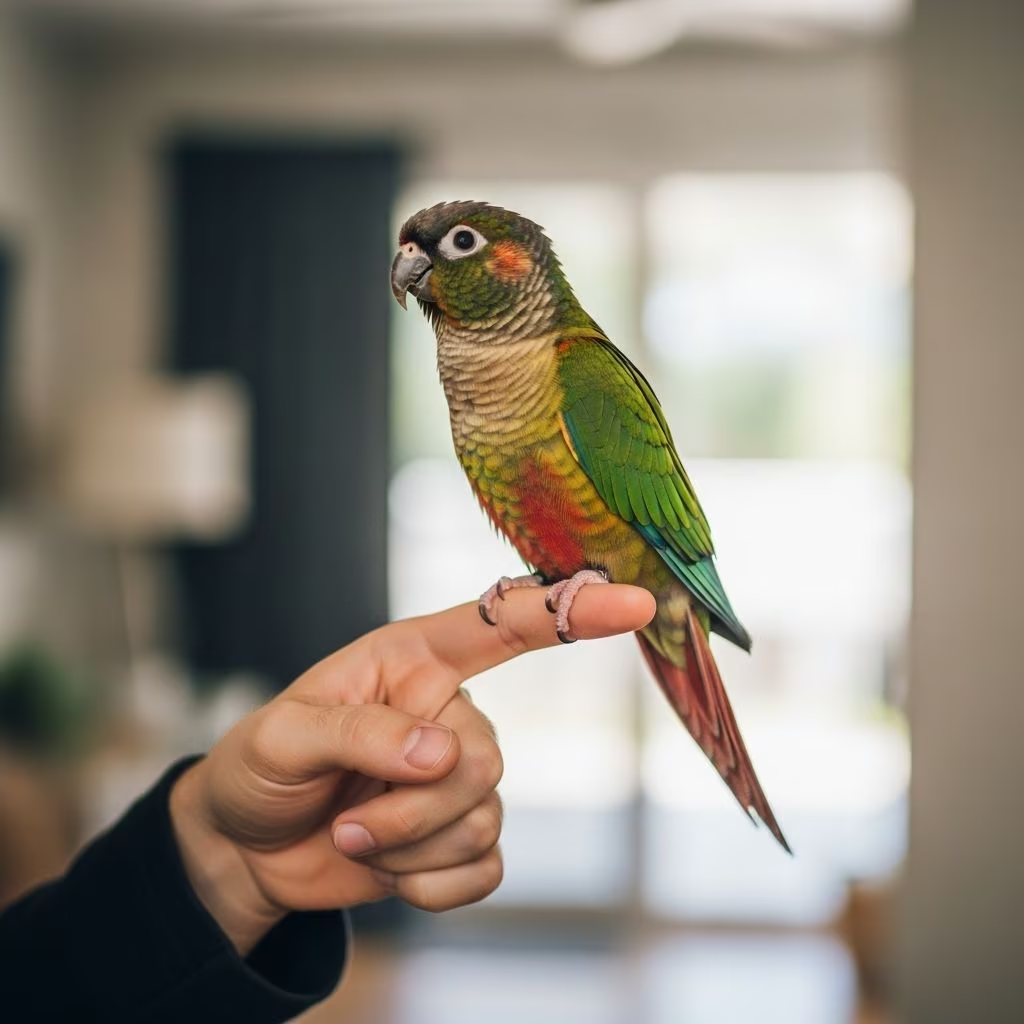
5 Basic Bird Training Tips for Beginners
Training your pet bird can be one of the most rewarding experiences as a pet owner. Whether you have a young fledgling or an adult parrot, establishing a solid foundation in bird training opens up a world of possibilities for communication, bonding, and behavioral management. This comprehensive guide covers five essential bird training tips that every beginner should know to successfully train their feathered companion.
Understanding the Foundation of Bird Training
Before diving into specific training techniques, it’s important to understand that bird training is fundamentally about building communication and trust between you and your pet. Unlike some other animals, birds respond exceptionally well to positive reinforcement and clear, consistent messaging. The principles of effective bird training apply whether you’re teaching a simple “step up” command or more advanced tricks like flight recall or speaking words.
Many beginners make the mistake of trying to teach too many behaviors at once or using punishment-based methods. These approaches are not only ineffective with birds but can actually damage your relationship with your pet. Instead, successful bird training relies on patience, consistency, and rewards that motivate your bird to repeat desired behaviors.
Tip 1: Build a Strong Relationship First
The foundation of all successful bird training is a strong, trusting relationship between you and your pet. Before attempting to teach any commands or tricks, dedicate time to simply being with your bird and allowing them to become comfortable with your presence.
Start by spending quality time near your bird’s cage, talking to them in calm, gentle tones. Many birds initially prefer to observe you from the safety of their cage before engaging in direct interaction. Pay attention to your bird’s behavior and personality to determine when they are most social and receptive to interaction. Some birds may be shy initially and require more time to build confidence, while others may eagerly seek your attention.
Offer treats during these bonding sessions to create positive associations with your presence. Your bird will begin to understand that your company brings good things—food, praise, and attention. This foundational trust is essential because your bird will only willingly participate in training if they trust you and enjoy your company. Without this relationship, even the best training techniques will fall short.
Tip 2: Master the “Step Up” Command
The “step up” command is the most fundamental training skill for pet birds and should be one of the first behaviors you teach. This command involves having your bird step onto your hand or finger from their perch or another surface. Mastering this command is crucial because it serves as the foundation for all other training and can even be lifesaving if your bird ever needs veterinary care or you need to move them quickly.
How to Teach “Step Up”
Teaching the “step up” command requires patience and consistency. Here’s the step-by-step process:
Start with proper positioning: Begin with your bird standing on a perch or other curved surface. Position yourself at a comfortable distance where your bird can easily reach your hand or finger.
Create gentle pressure: Press your finger gently against your bird’s lower chest or belly area. This gentle pressure will make your bird feel slightly off-balance, which naturally triggers them to lift one foot in search of security and stability.
Provide support: As your bird lifts their foot, position your finger or hand underneath to support them. Lift gently and steadily while saying the command “step up” in a clear, encouraging voice.
Reward immediately: As soon as your bird steps onto your hand or finger, offer enthusiastic praise, verbal encouragement, and a favorite treat. This immediate reward teaches your bird that stepping up results in positive outcomes.
Repeat consistently: Practice this exercise multiple times daily. Through repetition, your bird will begin to associate the verbal command “step up” with the physical action you’re asking them to perform.
Building Confidence and Consistency
Your own demeanor plays a critical role in your bird’s willingness to step up. Keep your hand very steady and project confidence. If you are nervous or afraid, your bird will sense this anxiety and may become hesitant or fearful themselves. Remember that confidence is contagious—your calm, assured presence will help your bird feel secure.
Once your bird consistently steps up onto your finger or hand, gradually introduce variation into the training. Teach your bird to step up onto both your left and right hands, as birds are creatures of habit and need to understand that the command works regardless of which hand you present. Practice “step up” in different locations and contexts—near their cage, in different rooms, and on various surfaces.
Additionally, work with other family members and trusted friends to train your bird to step up for them as well. This expands your bird’s social circle and ensures multiple people can safely handle your pet when necessary.
Tip 3: Introduce Tools Like Training Sticks
Once your bird has mastered stepping up onto your hand, introducing a training stick or perch expands your training possibilities. A training stick is a wooden dowel or specialized perch that allows you to interact with your bird while maintaining distance, which can be helpful for birds that are still building confidence or for larger birds that can deliver powerful bites.
Gradual Introduction Process
Never rush the introduction of a training stick. Some birds may take considerable time to become comfortable with this new object. Start by simply showing the stick to your bird from a distance and allowing them to observe it without pressure. Gradually move the stick closer to your bird during training sessions.
Once your bird seems comfortable with the stick nearby, practice having them step up onto it using the same techniques you used for hand training. Reward enthusiastically when they do. Over several sessions or weeks, gradually position the stick in different locations—moving it closer to the cage, eventually bringing it inside the cage for your bird to explore at their own pace.
The key is to never push your bird into the next step before they’re ready. Forcing progression in training will damage your relationship and make your bird more resistant to future training. Instead, celebrate small victories and let your bird move at their own pace.
Tip 4: Use Positive Reinforcement and Clicker Training
Positive reinforcement is the cornerstone of effective bird training. This method rewards desired behaviors, making your bird more likely to repeat them. Unlike punishment-based approaches, positive reinforcement builds trust and enthusiasm for training.
Understanding the Clicker Method
Clicker training is one of the most effective positive reinforcement techniques for birds. A clicker is a small device that makes a distinctive clicking sound. Here’s how it works:
Bridge the behavior: When your bird performs the desired behavior, immediately make the clicking sound. This click serves as a “bridge” between the behavior and the reward, clearly marking the exact moment your bird did something right.
Deliver the reward: Immediately after the click, provide a reward—typically a favorite treat. Your bird quickly learns that the click means a reward is coming.
Consistency creates understanding: Through consistent repetition of behavior-click-reward, your bird learns to associate specific actions with positive outcomes and will naturally want to repeat those behaviors.
Choosing Effective Rewards
Different birds have different preferences, so experiment to find what motivates your individual bird. High-value treats work best—these should be special foods your bird doesn’t get regularly. Possibilities include nuts, seeds, dried fruits, or small pieces of fresh fruit or vegetables. Some birds may also be motivated by social rewards like enthusiastic praise or physical affection such as gentle head scratches from you.
The key is to use rewards consistently and to make them valuable enough that your bird is genuinely motivated to perform the training task. If your bird isn’t interested in the reward you’ve chosen, try something different.
Tip 5: Practice Consistency and Patience
Perhaps the most important tip for successful bird training is maintaining consistency and patience throughout the process. Bird training is not a race, and rushing the process will only slow your progress.
Establishing a Training Routine
Set aside regular, dedicated training sessions with your bird. Short, frequent training sessions—perhaps 5 to 15 minutes—are more effective than longer, sporadic sessions. Birds have attention spans and can become frustrated or bored with prolonged training. Multiple short sessions throughout the day or several times per week will yield better results than one long weekly session.
Keep training sessions positive and end on a success. If your bird is struggling with a new concept, go back to something they already know and can perform successfully. This builds confidence and maintains enthusiasm for training.
Managing Expectations
Understand that some behaviors take time to learn. Just as with humans, every bird has their own learning pace. Some birds may learn a new command in a few days, while others may need weeks. Avoid frustration if progress seems slow. Patience and consistent effort will eventually pay off.
Remember to circle back and practice previously learned behaviors regularly. Birds can forget commands if they aren’t reinforced, so maintain all the skills your bird has learned through periodic practice sessions.
Avoiding Common Mistakes
Never punish your bird for failure to perform a behavior or for making mistakes during training. Punishment creates fear and damages your relationship with your bird. Additionally, avoid yelling, banging on the cage, or other negative responses. Instead, simply end the training session and try again later when both you and your bird are in a better state of mind.
Don’t overwhelm your bird by trying to teach multiple behaviors simultaneously. Focus on one behavior or command at a time until your bird has mastered it before introducing new challenges.
Building Advanced Skills From Basics
Once your bird has mastered the foundational commands like “step up” and understands the positive reinforcement system through clicker training, you can begin teaching more complex behaviors. Many birds are capable of learning tricks similar to those dogs learn, including waving, dancing, spinning, retrieving objects, and even flight recall.
The same principles apply to advanced training as to basic training: consistency, positive reinforcement, patience, and breaking complex behaviors into smaller, manageable steps. Always ensure your bird is physically and mentally ready before moving to advanced training.
Understanding Your Bird’s Communication
Effective training requires understanding how your bird communicates with you. Pay attention to body language, vocalizations, and behavioral patterns. When your bird seems eager and engaged, it’s a good time for training. When your bird appears stressed, tired, or disinterested, respect their signals and try again later.
Learning to read your bird’s mood and preferences will make you a more effective trainer and strengthen your relationship. This understanding is particularly important when working with birds that have behavioral challenges or fear-based responses to certain situations.
Frequently Asked Questions
Q: At what age can I start training my bird?
A: You can begin very basic relationship-building and socialization from a young age, but most structured training works best with birds old enough to focus and understand commands. Young fledglings can learn recall behavior naturally; most other formal training is best started once your bird is several months old and has settled into your home.
Q: How long does it take to train a bird?
A: The timeline varies significantly depending on the bird species, individual personality, and the specific behavior being taught. A simple command like “step up” may take days to weeks to master, while more complex tricks can take months. Consistency and patience are more important than speed.
Q: What should I do if my bird refuses to participate in training?
A: If your bird shows no interest in training, evaluate several factors: Are you using rewards your bird actually wants? Is your bird in a good mood? Are you trying to teach too many behaviors at once? Go back to basics, use higher-value rewards, and ensure your training sessions are short and positive.
Q: Can all bird species be trained?
A: Most bird species can learn basic commands and tricks, though some species and individual birds show more aptitude for training than others. The fundamental principles of positive reinforcement apply across all species, though the specific techniques may need adjustment for different sizes and personalities.
Q: How do I prevent my bird from unlearning trained behaviors?
A: Practice previously learned behaviors regularly—even just a few times weekly helps maintain skills. If you notice your bird isn’t responding to a command as well as before, increase practice frequency until the behavior is solid again.
References
- Pet Bird Flight Training — Chewy Education. 2025. https://www.chewy.com/education/bird/training-and-behavior/pet-bird-flight-training
- How To Train a Bird — PetMD. 2025. https://www.petmd.com/bird/how-train-bird
- How To Teach a Bird to Talk — Chewy Education. 2025. https://www.chewy.com/education/bird/training-and-behavior/how-to-teach-a-bird-to-talk
- Bird Training & Behavior — Chewy Education. 2025. https://www.chewy.com/education/bird/training-and-behavior
- End Pet Bird Hand Fear — Chewy Education. 2025. https://www.chewy.com/education/bird/training-and-behavior/end-pet-bird-hand-fear
- Stop The Squawk: Managing Bird Screaming — Chewy Education. 2025. https://www.chewy.com/education/bird/training-and-behavior/stop-the-squawk



