

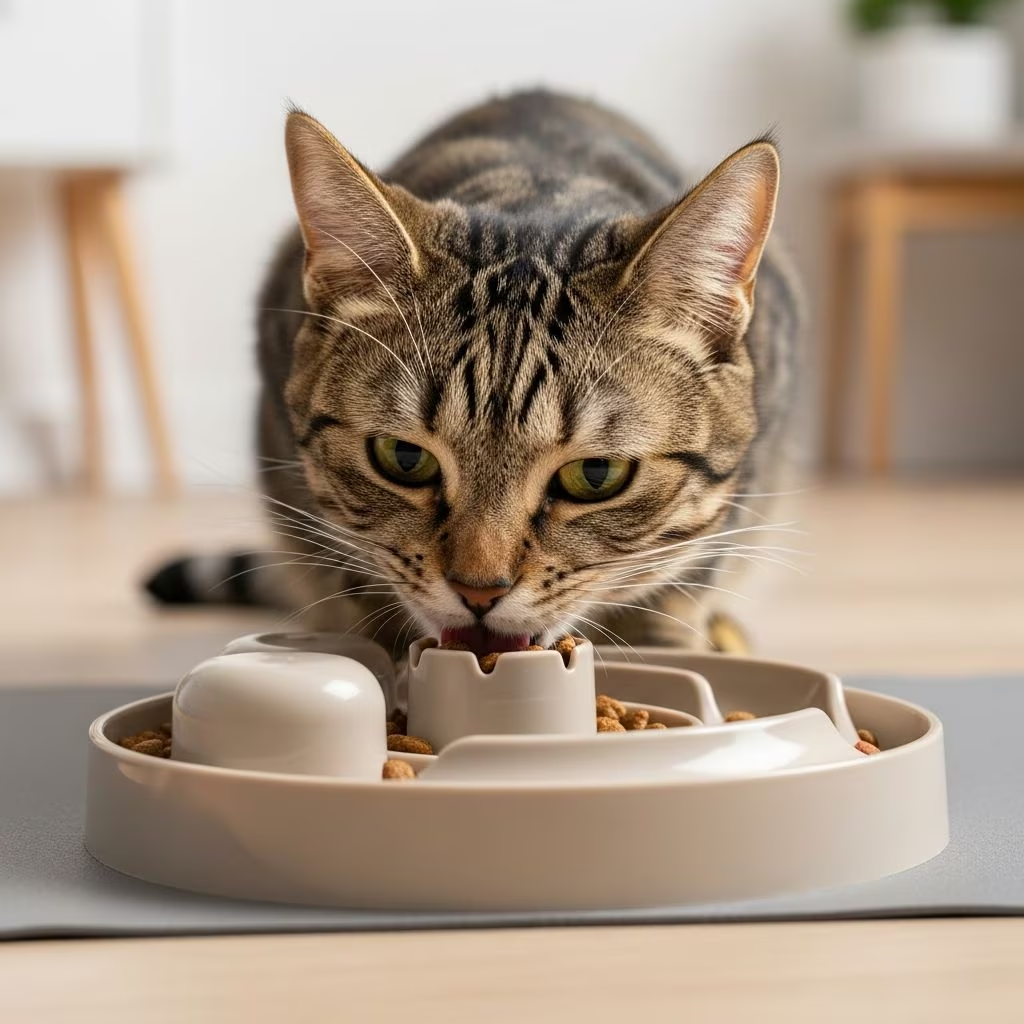
4 Ways to Slow Down Cats Who Eat Too Fast
Many cat owners encounter a common feeding challenge: their feline companions devour their meals at lightning speed. This rapid eating behavior can lead to digestive issues, regurgitation, and discomfort for your beloved pet. Fortunately, there are several practical and effective strategies to help your cat slow down during mealtime, promoting better digestion and overall health.
Whether your cat is naturally competitive around food, has developed fast-eating habits over time, or simply lacks mental stimulation during meals, the solutions outlined below can transform feeding time into a more enjoyable and beneficial experience for your pet. Let’s explore four proven methods to encourage slower eating in cats.
1. Make Your Kitty Work for Her Meals
One of the most effective ways to slow down your cat’s eating is to introduce interactive slow-feeding bowls that require her to actively work for her food. Traditional food bowls present no challenge to your pet—she can simply lower her head and consume the entire meal within seconds.
Specialized slow-feeding bowls transform mealtime into an engaging activity. Products like the Northmate Catch interactive feeder feature soft rubber spikes strategically placed throughout the bowl that trap kibble pieces. This design forces your cat to use her paws and nose to manipulate the food, pushing and grabbing individual pieces rather than gulping down mouthfuls. The mechanical process of extracting each kibble significantly extends the duration of the meal.
The benefits of this approach extend beyond simply slowing consumption. By requiring your cat to work for her food, you’re mimicking the natural foraging behavior that cats would engage in if they were hunting in the wild. This mental engagement provides enrichment during feeding time and can help reduce boredom-related behaviors. Your cat receives the dual benefit of improved digestion from slower eating and mental stimulation from the interactive process.
When selecting a slow-feeding bowl, look for designs with adjustable difficulty levels if possible, or consider multiple bowl options to provide variety and maintain your cat’s interest in the feeding experience.
2. Create Your Own Slow Feeder
If you’re hesitant about investing in specialized feeding equipment—or if your finicky feline has rejected commercial slow feeders in the past—creating a DIY slow feeder is an economical and highly effective alternative. This simple solution requires minimal effort and materials you likely already have at home.
The concept is straightforward: place an inert, non-toxic object inside your cat’s regular food bowl to create an obstacle that your pet must navigate around to reach her food. Clean rocks or bricks work excellently for this purpose, as they’re large enough that your cat cannot accidentally ingest them, yet small enough to fit comfortably in most food bowls.
This DIY method works equally well with both dry kibble and wet food, making it a versatile solution for any feeding preference. When using wet food, ensure the rock or brick is thoroughly cleaned before placing it in the bowl. Your cat will be forced to move her head and maneuver around the obstacle to access each bite, naturally extending mealtime and promoting slower consumption.
The advantages of this approach are numerous. It requires no financial investment, uses items you already have available, and can be implemented immediately. Additionally, your cat has no reason to reject this modified feeding bowl since it’s still her familiar dish—only slightly reconfigured. This makes it an excellent starting point for cats that have shown resistance to new feeding equipment.
Experiment with different sized obstacles to find the right balance for your cat. A larger rock may slow her down more effectively, while a smaller one might be easier for her to work around initially.
3. Let Your Cat Play with Her Food
Interactive toys that dispense kibble operate on the same principle as slow-feeding bowls but with an added element of entertainment and engagement. Rather than eating from a stationary bowl, your cat pursues, bats, and manipulates a toy to release small portions of food as a reward for her efforts.
These interactive feeding toys provide a comprehensive solution that addresses multiple aspects of your cat’s wellbeing simultaneously. First and foremost, they dramatically slow down eating by limiting the amount of food available at any given moment and requiring active participation to access more. As your cat swats, pounces, and pushes the toy around, she’s receiving physical exercise that helps maintain a healthy weight and supports cardiovascular health.
The PetSafe Interactive Feeder is an excellent example of this category. Shaped like a ball, this toy can be filled with dry kibble and features adjustable difficulty settings. As your cat bats it around the room, the toy dispenses food gradually based on the angle and force of impact. The difficulty adjustment feature is particularly valuable, as it allows you to increase the challenge as your cat becomes more proficient, preventing boredom and maintaining engagement.
Beyond the physical and digestive benefits, interactive feeding toys provide crucial mental stimulation. Cats are natural hunters and problem-solvers. By turning meals into a puzzle or chase game, you’re tapping into these innate instincts and providing enrichment that helps prevent behavioral issues related to boredom and understimulation.
The beauty of this approach lies in its multi-faceted benefits. Your cat gains exercise, mental enrichment, and improved digestion simultaneously—truly a win-win-win solution for both your pet and your household.
4. Spread Out the Meal
Sometimes the simplest solutions prove to be the most effective. Distributing your cat’s food across a larger surface area naturally slows consumption because your pet must physically move to reach each portion of food. This straightforward approach requires no special equipment and can be tailored to your specific situation.
Using Flat Surfaces
Instead of concentrating food in a traditional bowl, spread wet food or kibble across a large, flat surface such as a 9-by-13-inch baking pan or a ceramic tile. The spread-out presentation means your cat encounters gaps between food pieces, forcing her to pause and move between bites rather than consuming everything in one location. This method is highly effective at reducing the rapid gulping behavior that characterizes fast eaters.
Utilizing Divided Containers
Another creative approach involves dividing meals among sections of a muffin tin—whether regular-sized or mini versions. By placing small portions of food in each cup of the muffin tin, you create natural portions that your cat must access individually. This not only slows eating but also helps with portion control, making it particularly useful if your cat is overweight or prone to overeating.
Ice cube trays offer another innovative option for portion division. Fill individual ice cube compartments with small amounts of food, requiring your cat to move from section to section. This method works particularly well with wet food and can be refrigerated between meals if prepared in advance.
Multi-Location Feeding Strategy
For a more comprehensive approach to meal spacing, consider dividing your cat’s daily food portion into multiple small bowls and placing them in different locations throughout your home. You might position one bowl in the kitchen, another in an upstairs hallway, and a third in the family room or living area. This strategy accomplishes several objectives simultaneously:
Your cat experiences increased physical activity as she moves between feeding locations throughout the day. This additional movement supports weight management and cardiovascular health. The extended timeframe over which she consumes her meals dramatically slows overall eating pace. Your cat experiences environmental enrichment and mental stimulation as she explores different areas of your home. The spacing between meals allows for better digestion between portions.
This approach is particularly effective for indoor cats that lack sufficient physical activity and mental stimulation. By transforming feeding into an exploration activity, you’re addressing multiple behavioral and health concerns simultaneously.
Understanding Why Cats Eat Too Fast
Before implementing solutions, it’s helpful to understand the underlying reasons why cats develop fast-eating habits. Some cats have a natural predisposition toward rapid consumption, possibly stemming from early experiences of food scarcity or competitive feeding environments with other cats. Others may eat quickly out of boredom or lack of mental enrichment during meals.
In multi-cat households, competitive feeding dynamics often drive faster eating. Cats may fear that other felines will consume their portion if they don’t eat quickly. Understanding these motivations can help you select the most appropriate solution for your specific situation.
Health Benefits of Slower Eating
Implementing strategies to slow your cat’s eating pace offers significant health advantages. Slower consumption allows your cat’s digestive system adequate time to process food properly, reducing episodes of regurgitation or vomiting after meals. Improved digestion supports better nutrient absorption and overall nutritional status.
Faster eating rates have been associated with bloating and gastrointestinal discomfort in cats. By reducing eating speed, you minimize these uncomfortable and potentially serious digestive issues. Additionally, extended feeding times can support weight management by giving your cat’s brain adequate time to register satiety signals, potentially reducing overeating and associated obesity.
Combining Multiple Strategies
While any single method can be effective, combining multiple approaches often yields the best results. For example, you might use an interactive feeding toy for your cat’s main meal while employing the multi-location strategy for treats or secondary portions. Alternating between different slow-feeding methods throughout the week prevents boredom and maintains your cat’s engagement with feeding time.
Monitoring Your Cat’s Progress
After implementing any feeding strategy modification, observe your cat’s response over several days. Notice whether regurgitation episodes decrease, whether her energy levels improve, and whether she demonstrates greater satisfaction with meals. Most cats adapt to new feeding methods within a few days, though some individuals may require longer adjustment periods.
If you notice your cat completely rejecting a particular method after a week of attempts, try an alternative approach. Every cat has unique preferences and personality traits that influence which strategies work best for them.
Consulting Your Veterinarian
If your cat’s fast eating is accompanied by excessive weight gain, persistent regurgitation, or other health concerns, consult your veterinarian. She can evaluate your cat’s overall health status, assess whether underlying medical conditions contribute to rapid eating, and provide personalized recommendations based on your cat’s specific needs.
Frequently Asked Questions
Q: Why does my cat eat so fast?
A: Cats may eat quickly due to natural instincts, competition with other pets, boredom, or learned behaviors from early food scarcity experiences. Fast eating is particularly common in multi-cat households where cats fear losing their food to other animals.
Q: Will slow-feeding methods work for wet food?
A: Yes, most slow-feeding methods work well with wet food. DIY obstacle bowls, baking pan spreading, and muffin tin division all work effectively with canned or wet food. Simply ensure any obstacles are clean before use.
Q: How long does it take to see results?
A: Many cats respond positively within the first few days of implementing a slower-feeding strategy. However, some cats may require a week or more to fully adapt to new feeding methods. Most regurgitation issues improve significantly within two to three weeks of consistent implementation.
Q: Is it safe to put rocks or bricks in my cat’s food bowl?
A: Yes, provided the rock or brick is thoroughly cleaned and large enough that your cat cannot accidentally ingest pieces of it. Ensure the object is stable and won’t tip over easily when your cat manipulates it.
Q: Can I use interactive feeders with both dry and wet food?
A: Most interactive feeding toys are designed primarily for dry kibble, though some can accommodate wet food. Check the product specifications before purchasing. For wet food, spreading it on a flat surface or using a muffin tin may be more practical.
Q: Should I use slow-feeding methods for all meals?
A: For best results, apply slow-feeding strategies consistently throughout the day. Using them for only one meal while allowing rapid eating at other times limits their effectiveness. Consistency helps reinforce the slower eating habit.
Q: What should I do if my cat refuses to use a slow feeder?
A: Try an alternative method. If your cat rejects one type of slow feeder, she may accept another. DIY solutions like obstacle bowls or flat-surface feeding often work better for cats resistant to commercial products.
Q: Can slow feeding help with weight management?
A: Yes, slower feeding combined with portion control can support healthy weight management. Extended eating time allows satiety signals to register properly, potentially reducing overall food consumption.
References
- 4 Ways To Slow Down Cats Who Eat Too Fast — Chewy. 2024. https://www.chewy.com/education/cat/food-and-nutrition/4-ways-to-slow-down-cats-who-eat-too-fast
- How to Slow Down a Cat Who Is Eating Too Fast — PetMD. 2024. https://www.petmd.com/cat/general-health/how-slow-down-cat-who-eating-too-fast
- 7 Reasons Your Cat Eats Too Fast and How to Slow Them Down — Cat Amazing. 2024. https://catamazing.com/blogs/cat-amazing-blog/7-reasons-why-your-cat-eats-so-fast-and-exactly-how-to-slow-them-down
- 8 Useful Hacks to Implement If Your Cat Eats Too Fast — Outward Hound. 2024. https://outwardhound.com/furtropolis/cats/cat-eats-too-fast
- Cat Feeding Schedule Tips from Your Pacheco, CA Vet — Montecito Animal Clinic. 2024. https://montecitoanimalclinic.com/cat-feeding-schedule-pacheco/



