

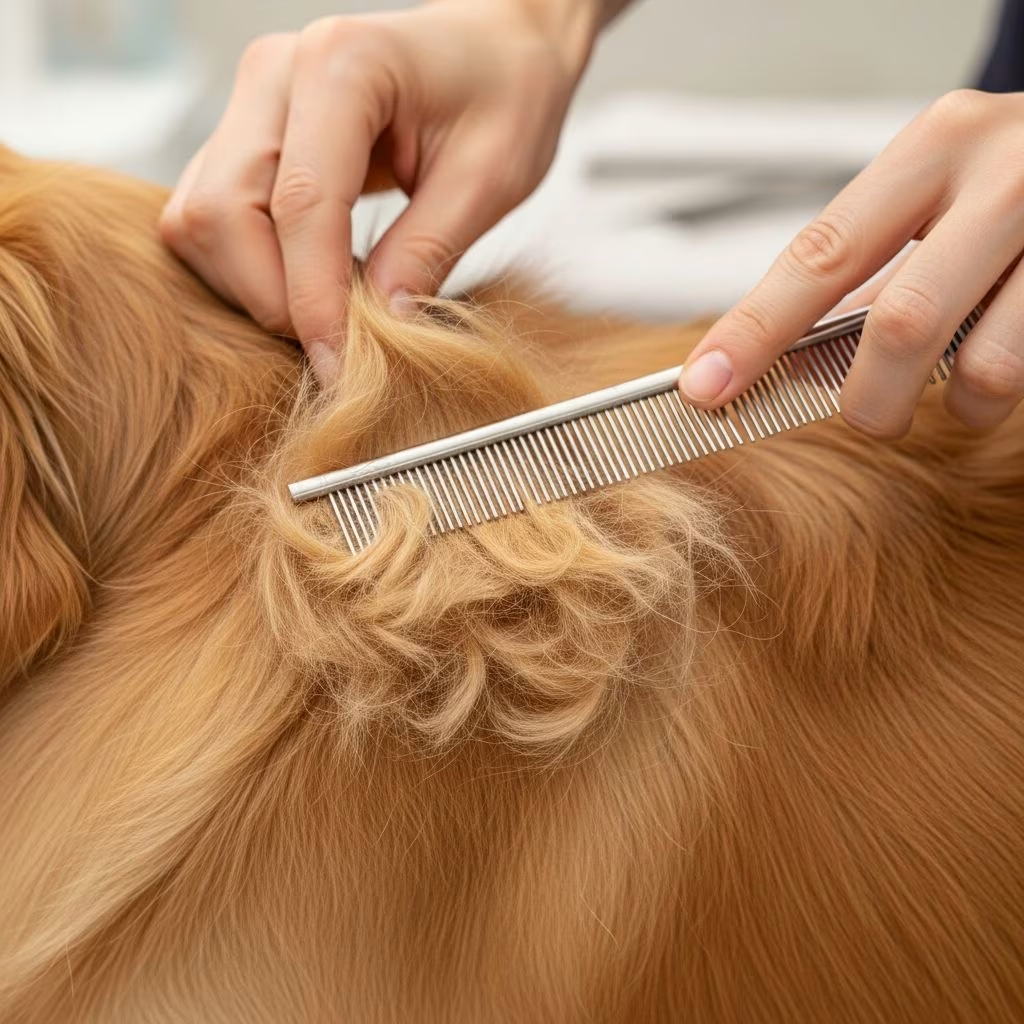
How to Untangle Matted Dog Hair: A Comprehensive Guide
Matted fur is one of the most common grooming challenges pet parents face, especially those with long-haired dogs. Whether caused by neglect, weather conditions, or your dog’s natural coat type, mats can be uncomfortable for your furry friend and frustrating for you to address. Understanding how to safely remove matted hair and prevent future matting is essential for maintaining your dog’s health and comfort.
Matted coats can trap moisture and heat against your dog’s skin, potentially leading to skin irritation, infections, and discomfort. In severe cases, mats can hide underlying health issues like fleas or skin conditions. The good news is that with the right approach and tools, you can effectively untangle matted dog hair and establish a grooming routine that prevents recurrence.
Understanding Why Dogs Get Matted Hair
Before diving into the solution, it’s important to understand why matting happens in the first place. Matted fur typically results from a lack of regular grooming. When your dog moves, individual hairs rub together. Without consistent brushing, these rubbed hairs become tangled and eventually form tight mats that are difficult to remove.
The frequency of brushing needed depends on several factors, including the length of your dog’s coat, the coat type (curly versus straight, soft versus wiry), and your dog’s activity level. Dogs with long double coats are particularly prone to matting because they shed heavily and have thick undercoats that easily become tangled.
Certain situations increase the likelihood of matting. Winter weather, increased outdoor activity, swimming, or inadequate drying after bathing can all contribute to mat formation. Additionally, if mats go unaddressed, they tend to multiply, creating a more severe grooming problem over time.
Step 1: Assess the Severity and Prepare Your Dog
The first step in addressing matted hair is to carefully assess how severe the matting is and determine whether you can handle it at home or need professional help.
Evaluate the Mats
Examine your dog’s coat closely to understand the extent of the matting. Are the mats small and loose, or are they large, tight, and close to the skin? Check different areas of your dog’s body, paying special attention to areas where mats commonly form, such as behind the ears, under the armpits, around the rear end, and between the hind legs.
Mats that are tightly bonded to the skin or cover a large portion of your dog’s body may be best handled by a professional groomer. Attempting to remove severely matted hair at home risks cutting your dog’s delicate skin, as mats are often so close to the skin’s surface that scissors or clippers can easily cause injury.
Choose Dry Hair Over Wet Hair
Always work with dry hair when removing mats. Wet or damp hair makes matting worse—moisture causes mats to tighten and become more extensive. If you’ve recently bathed your dog, allow the coat to dry completely before attempting to remove mats.
Starting with a dry dog provides several advantages. Dry hair is often easier to work through with brushes and dematting tools. The texture makes it simpler to separate tangled strands without causing additional breakage or skin irritation.
Gather the Right Tools
Using the correct tools is crucial for safe and effective mat removal. Invest in high-quality grooming supplies designed specifically for dematting:
- Slicker Brush: This tool has short, fine, short wires close together on a flat or slightly curved surface. It’s excellent for removing loose undercoat and working through tangles before they become severe mats.
- Metal Comb: A wide-toothed metal comb helps you identify hidden mats below the top layer of the coat and provides a safety barrier between the mat and your dog’s skin.
- Dematting Tool: This specialized tool features sharp, angled blades designed to gently pick apart mats from the top to the bottom. It’s more effective than scissors because it poses less risk of cutting the skin.
- Dog Clippers: For severe mats that cannot be brushed out, electric dog clippers are the safest option. They allow you to shave away matted sections without the risk that comes with using scissors.
Never use regular scissors to remove mats. Because mats are stuck so close to your dog’s skin, scissors often slice the skin when you attempt to cut through the mat. Professional groomers strongly advise against this method, as it frequently results in injuries.
Step 2: Safely Remove the Matted Hair
Once you’ve assessed the situation and gathered your tools, it’s time to carefully remove the mats.
Start with a Metal Comb as a Barrier
Before using any cutting tool, place a metal comb between the mat and your dog’s skin. This protective barrier is essential because it prevents you from accidentally cutting your dog’s skin. The comb sits flush against the skin, and you work on removing the mat above it.
Use Dematting Tools for Manageable Mats
For mats that aren’t immediately adjacent to the skin, use a dematting tool to gently pick them apart. Start at the top of the mat and work downward, using small, gentle motions. The goal is to separate the tangled hair gradually rather than ripping through it, which can cause breakage and discomfort.
Work slowly and patiently. Rushing the process increases the risk of skin injury and causes unnecessary stress to your dog. If your dog becomes uncomfortable or restless, take breaks to keep the experience as positive as possible.
Apply Clippers for Severe Matting
For mats that are tightly bonded to the skin or so severe that other methods aren’t working, electric clippers are your safest option. Always keep the metal comb barrier between the clipper blade and your dog’s skin. This protects the skin while allowing you to shave away the matted hair.
Clip in the direction of hair growth, moving slowly and carefully. If you’re uncomfortable using clippers or if mats are extremely close to the skin, this is the time to stop and seek professional grooming help.
Use De-matting Sprays as a Supplementary Aid
De-matting sprays are leave-in conditioners that can help loosen small tangles and loose mats. Spray or pour the product over affected areas and let it sit for the time specified on the product label. These sprays work best on very loose or small tangles rather than severe mats.
Always read product directions carefully to understand how to apply the spray, how long to let it sit, and whether it needs to be rinsed out. De-matting sprays are most effective as a preventative measure and for addressing minor matting before it becomes severe.
Step 3: Post-Removal Care and Prevention
After you’ve successfully removed the mats, proper aftercare is essential to prevent recurrence and keep your dog’s coat healthy.
Bathe and Condition Your Dog
Once mats are removed, give your dog a thorough bath using a mild dog shampoo and quality conditioner. Warm water (not hot) works best. Make sure to work the shampoo down to the skin, not just the outer coat. A clean, well-conditioned coat is less prone to matting than a dirty coat.
Rinse thoroughly to remove all shampoo residue. Poor rinsing can lead to skin irritation, hair loss, and matted fur. If you’re unsure whether you’ve rinsed completely, continue rinsing for longer than you think necessary.
Dry and Comb Out the Entire Coat
After bathing, towel dry your dog or allow the coat to dry naturally. Once mostly dry, comb out the entire coat thoroughly using your slicker brush and metal comb. This step removes any remaining loose hair and ensures no new mats are forming as the coat dries.
Brush in the direction of hair growth for best results. Pay special attention to areas prone to matting, and make sure your brush penetrates down to the skin, not just the top coat.
Preventing Future Matting: Long-Term Grooming Strategies
The most effective solution to matted hair is prevention through consistent grooming practices.
Establish a Regular Brushing Schedule
Dogs with long coats should be brushed two to three times per week using a slicker brush and metal comb. The slicker brush removes undercoat and prevents tangles, while the metal comb helps you find hidden mats below the surface of the coat before they become problematic.
Dogs with thick, shedding undercoats benefit from regular grooming with a dog rake, which removes loose undercoat more efficiently than a slicker brush alone.
Consistency is key. Regular brushing is far easier and less stressful for your dog than attempting to remove severe mats after months of neglect.
Use Proper Brushing Technique
Simply brushing the top of your dog’s coat isn’t sufficient for preventing mats. You must use a brush with bristles that penetrate the coat all the way down to the skin. Short, superficial brushing may remove loose hair from the surface but leaves the undercoat untouched, allowing mats to form underneath.
Always brush in the direction of hair growth. This technique is gentler on the coat and more effective at removing tangles and loose hair.
Pre-Bath Brushing Is Essential
Brush your dog’s fur before bathing them. Water can make mats and knots even tighter in dogs with long hair, so starting with a mat-free coat ensures that bathing won’t create new matting. Even a quick brush before bath time makes a significant difference in coat health.
After bathing, brush the coat again once it’s dry to remove any loose hair and ensure no new mats form as the coat dries.
Pay Attention to Seasonal Changes
Winter and summer weather can increase matting risk. During winter, if you neglect grooming, your long-haired dog’s hair can become extremely tangled and matted, potentially exposing the dog to more moisture and skin irritation. During summer or after water activities, make sure to dry your dog thoroughly and brush out the coat to prevent moisture-related matting.
When to Seek Professional Grooming Help
There are several situations where professional grooming is the best choice:
- Mats that are tightly bonded to the skin or extremely severe
- Mats covering a large portion of your dog’s body
- Your dog won’t sit still long enough for you to complete the dematting process safely
- You don’t have the correct tools or aren’t confident in your ability to use them safely
- You’re unsure which shampoos or conditioners are safe for your dog
- Your dog shows signs of skin irritation, infection, or other health issues related to matting
An experienced groomer can complete the task more quickly and with less stress to your dog. They have professional-grade tools and extensive experience handling difficult matting situations safely.
Frequently Asked Questions About Matted Dog Hair
Q: Can I use scissors to remove matted dog hair?
A: No. Scissors are not recommended for removing mats because pets don’t always stand completely still, and mats are stuck so close to the skin’s surface that you can easily cut your dog’s delicate skin. Clippers or dematting tools are much safer options.
Q: How often should I brush my long-haired dog?
A: Dogs with long coats should be brushed two to three times per week using a slicker brush and metal comb to prevent matting and keep the coat healthy.
Q: What should I do if mats are close to my dog’s skin?
A: If mats are tightly bonded to or very close to your dog’s skin, seek professional grooming help. A professional groomer has the expertise and tools to safely remove these mats without injuring your dog’s skin.
Q: Can wet hair be used for mat removal?
A: No. Always work with dry hair. Wet hair makes matting worse—moisture causes mats to tighten and become more extensive, making removal more difficult and painful for your dog.
Q: Are de-matting sprays effective?
A: De-matting sprays are helpful for very loose or small tangles in the hair. They are leave-in conditioners that make mats easier to loosen and brush out, but they’re most effective as a preventative measure rather than for severe matting.
Q: What health issues can matted fur cause?
A: Matted coats can trap moisture and heat, leading to skin irritation and infections. Matting can also hide underlying problems like fleas and skin conditions. Additionally, mats restrict air circulation and can cause discomfort to your dog.
Q: Should I bathe my dog before or after removing mats?
A: Brush your dog before bathing to prevent water from tightening mats. After removing mats, bathe and condition your dog, then thoroughly dry and comb the coat again.
References
- Pet Grooming: How to Handle Matting in Dogs and Cats — PetMD. 2020-05-08. https://www.petmd.com/dog/grooming/pet-grooming-how-handle-matting-dogs-and-cats
- Tips for Grooming Your Dog During the Winter — Chewy. https://www.chewy.com/education/dog/grooming/tips-for-grooming-your-dog-during-the-winter
- How To Brush a Dog, According to a Pro Groomer — Chewy. https://www.chewy.com/education/dog/grooming/brushing-a-dog
- 6 Dog Grooming Mistakes to Avoid — Chewy. https://www.chewy.com/education/dog/grooming/dog-grooming-mistakes
- Should I Shave My Dog in the Summer? — Chewy. https://www.chewy.com/education/dog/grooming/should-i-shave-dog-in-summer



