

3 Steps to Having a Confident Cat With Jackson Galaxy
If you’re a cat parent struggling with a shy or anxious feline companion, you’re not alone. Many cat owners find themselves wondering how to help their cats gain confidence and become more social. The good news is that with expert guidance from Jackson Galaxy, the renowned “Cat Daddy,” you can transform your timid tabby into a confident, engaging member of your household. These proven catification tips and behavioral techniques are designed to help even the most fearful cats feel secure and empowered in their environment.
Building confidence in shy cats doesn’t require expensive interventions or complicated procedures. Instead, it relies on understanding feline psychology, implementing strategic environmental modifications, and using consistent positive reinforcement techniques. Whether your cat spends most of their time hiding under the bed or refuses to venture into certain rooms, Jackson Galaxy’s systematic approach provides practical solutions that cat parents can implement immediately.
Understanding the Shy Cat: Why Confidence Matters
Shy cats, often referred to as “Wallflowers” in Jackson Galaxy’s terminology, experience the world differently than their more outgoing counterparts. These cats may have had limited socialization, experienced trauma, or simply possess naturally cautious temperaments. Regardless of the cause, their lack of confidence affects their quality of life and their relationship with their human family members.
The importance of building confidence in shy cats cannot be overstated. A confident cat is a healthier, happier cat who enjoys a better quality of life. Confident cats are more likely to engage with their environment, interact with family members, and participate in enriching activities. By implementing Jackson Galaxy’s three-step approach, you’re not just helping your cat become more social—you’re enhancing their overall wellbeing and creating a more harmonious household dynamic.
Step 1: Control the Environment Through Strategic Catification
The foundation of Jackson Galaxy’s approach to building confident cats begins with environmental control through catification. Catification refers to the process of creating an enriched, cat-friendly living space that addresses your feline’s physical and psychological needs. When shy cats have multiple vertical options and escape routes, they feel more secure and in control of their surroundings.
Creating Vertical Territory
Vertical space is crucial for shy cats. By installing cat trees, wall-mounted shelves, and elevated perches, you give your cat safe vantage points from which to observe their world. Shy cats often feel vulnerable at ground level, so providing vertical territory allows them to watch household activities from a secure position. This elevated perspective helps them build confidence gradually without feeling threatened.
Jackson Galaxy recommends creating a “challenge line”—an imaginary boundary that gently encourages your shy cat to venture just slightly beyond their comfort zone each day. By strategically placing treats, toys, or enticing elements just past this line, you encourage your cat to take small risks, which gradually expands their comfort zone and builds confidence naturally.
Blocking Hiding Spots Strategically
While it might seem counterintuitive, one of Jackson Galaxy’s key recommendations is to control where your cat can hide. Most shy cats gravitate toward the space under the bed or in dark closets, where they feel secure but become isolated from family life. By blocking these spaces strategically—placing something under the bed or on top of it—you gently redirect your cat’s need for security toward more visible, interactive locations.
The goal isn’t to eliminate all hiding spaces, but rather to provide alternative secure areas that keep your cat closer to family activity. A covered cat bed in the living room or a cat tree in the corner offers security while allowing your shy cat to participate in household life. This subtle environmental adjustment is a game-changer for building cat confidence.
Step 2: Implement Play Therapy and Interactive Engagement
Jackson Galaxy’s second step to building confident cats involves what he calls “play therapy.” This technique recognizes that cats are natural hunters, and channeling this instinct through interactive play builds confidence regardless of a cat’s personality type—whether they’re a Wallflower or a Napoleon.
The Power of Interactive Play
Interactive play therapy works because it taps into your cat’s innate hunting drive. When cats engage in the hunt, they don’t just exercise their bodies; they build confidence through successful predation experiences. Even the most timid cat has an inner hunter waiting to be awakened. By using interactive toys like the Jackson Galaxy Air Prey toy or a simple wand toy with a feather, you can draw your shy cat into active play sessions that gradually expand their territorial range and increase their confidence.
During play therapy sessions, start in your cat’s safe zone and gradually guide them away from walls and into more open spaces. As your shy cat becomes engaged in the hunt, they’ll naturally move around more, explore different areas, and begin to see the wider environment as safe and rewarding. This process, combined with the excitement of the hunt, creates positive associations with movement and exploration.
Using Desensitization and Counter-Conditioning
Jackson Galaxy emphasizes the importance of desensitization and counter-conditioning techniques when building confidence in shy cats. These behavioral modification strategies work by exposing your cat to feared situations in a controlled, positive way, gradually changing their emotional response to those situations.
For example, if your cat is frightened by the doorway to another room, use play therapy to gently guide them toward and through that doorway during play sessions. Each successful passage through the doorway, paired with the positive experience of play, desensitizes them to their fear. Over time, what once seemed like an “electrified fence” becomes a normal part of their exploration route.
Step 3: Positive Reinforcement and Clicker Training
The third critical step in Jackson Galaxy’s approach to building confident cats involves positive reinforcement and clicker training. These scientifically-backed training methods reward desired behaviors, making your shy cat more likely to repeat them and more confident in their interactions with you.
Clicker Training Basics
Clicker training uses a small handheld device that makes a distinctive clicking sound, which is immediately followed by a reward. This technique works because it clearly marks the exact moment your cat performs the desired behavior, creating a strong association between the action and the reward. For shy cats, clicker training builds confidence because it establishes clear communication: they understand exactly what behaviors earn them rewards.
Jackson Galaxy recommends starting with simple behaviors like touching a target stick or your hand. The sequence is straightforward: target behavior occurs, click the clicker, immediately provide a high-value treat. The click sound becomes a promise of reward, and your cat becomes eager to engage in training sessions. This enthusiasm and sense of accomplishment builds genuine confidence.
Finding the Jackpot Treat
Success with positive reinforcement depends on identifying your cat’s “jackpot treat”—the reward that motivates them most intensely. This might be freeze-dried fish, special chicken, or a particular commercial treat. By using high-value treats that your cat is genuinely excited about, you create powerful motivation for engagement and learning.
Jackson Galaxy emphasizes consistency and short training sessions. Rather than lengthy, exhausting training periods, aim for sessions of just two to three minutes, repeated several times daily. This approach prevents frustration and maintains your cat’s enthusiasm. Over time, even shy cats begin to seek out training sessions because they’ve experienced repeated success and positive interactions with their humans.
Teaching Confidence-Building Behaviors
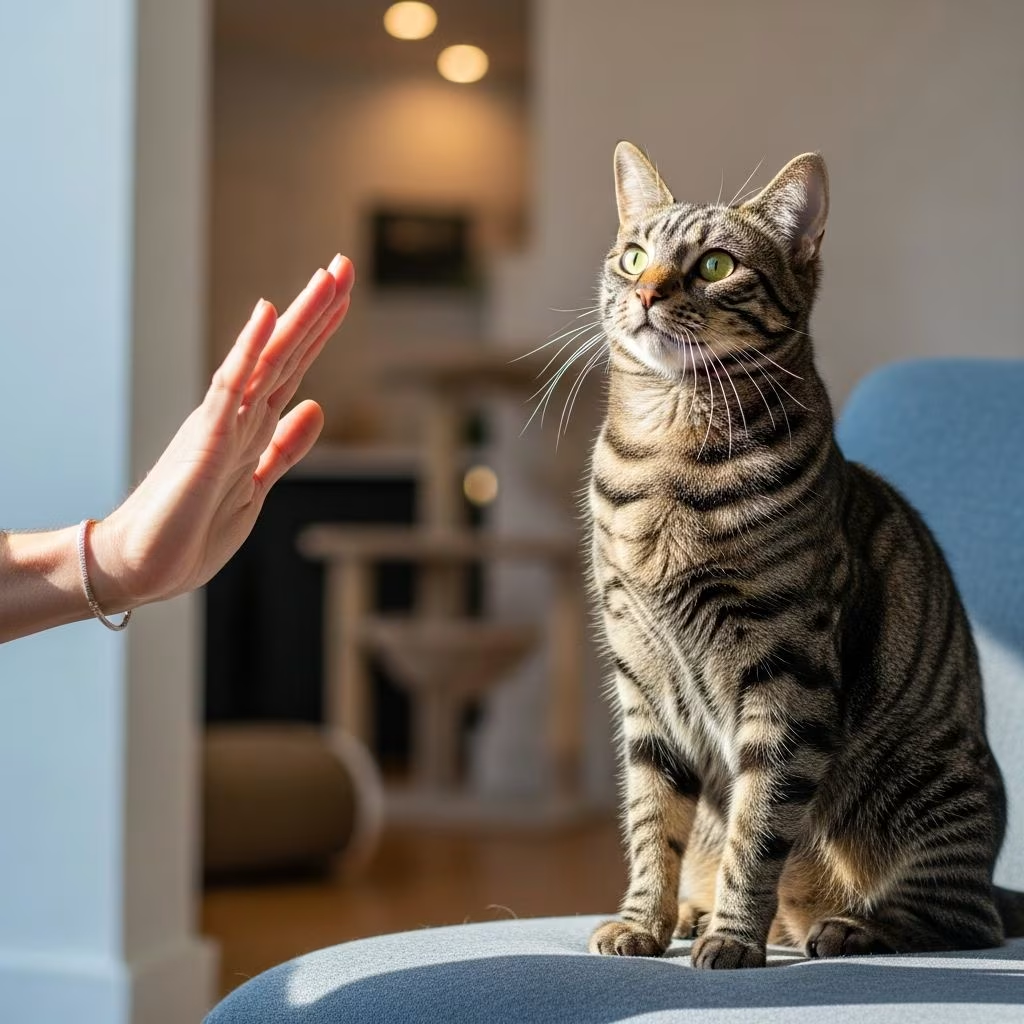
Using clicker training and positive reinforcement, you can teach specific behaviors that inherently build confidence. Teaching your cat to jump on furniture, high-five, or navigate vertical territory creates a series of small successes. Each successful behavior completion reinforces your cat’s belief in their own capability. A cat that can successfully execute a high-five is a more confident cat overall.
Integrating the Three Steps: A Comprehensive Approach
The true power of Jackson Galaxy’s method lies in integrating all three steps into a cohesive strategy. Environmental catification provides the physical foundation, play therapy engages your cat’s natural instincts and builds positive associations, and positive reinforcement through clicker training cements new behaviors and boosts confidence.
A typical day implementing all three steps might look like this: Your shy cat has vertical territory where they can observe safely (Step 1). You conduct two or three short interactive play therapy sessions, gradually guiding them away from walls and into new spaces (Step 2). Between play sessions, you do brief clicker training sessions targeting specific confidence-building behaviors, using their jackpot treat (Step 3). Over weeks and months, this integrated approach produces remarkable transformations.
What to Expect: Timeline and Realistic Progress
Building confidence in shy cats requires patience and consistency. Jackson Galaxy emphasizes that there’s no quick fix—success depends on daily effort and repetition. However, even modest consistent effort produces results. Cat parents often notice improvements within two to three weeks of implementing these techniques properly.
Initial progress might include your cat spending more time outside their hiding spots, showing increased interest in play, or responding more readily to your presence. As weeks progress, you should see your cat exploring new areas, engaging more confidently with family members, and displaying more natural, relaxed body language.
Remember that every cat progresses at their own pace. A cat who has been shy for years may take longer to transform than a recently traumatized cat. The key is maintaining consistency and celebrating small victories. Each new space explored, each successful play session, and each positive interaction builds momentum toward greater confidence.
Common Mistakes to Avoid
While implementing Jackson Galaxy’s techniques, be aware of common pitfalls that can slow progress. Avoid forcing interaction with your shy cat—instead, let them approach you at their own pace. Don’t expect immediate results; building genuine confidence takes time. Additionally, avoid punishment-based training, which increases anxiety rather than building confidence.
Another common mistake is inconsistency. Your shy cat needs to experience the same supportive, enriched environment and positive reinforcement every day for these techniques to work effectively. If you implement these strategies sporadically, progress will be sporadic as well.
Frequently Asked Questions
Q: How long does it take to see results with Jackson Galaxy’s techniques?
A: Most cat parents notice initial improvements within two to three weeks of consistent implementation. However, more significant transformations typically take several months. The timeline depends on your cat’s history and temperament, but consistency is key to seeing steady progress.
Q: What if my cat refuses to play with interactive toys?
A: Try different toy types and play styles. Some cats respond better to wand toys, while others prefer balls or feather toys. Experiment during different times of day when your cat might be more energetic. You can also try using treats to gradually introduce toys, making them more appealing.
Q: Can older cats become more confident using these methods?
A: Absolutely. Age is not a barrier to building confidence. While younger cats might progress faster, older cats can absolutely become more confident through consistent implementation of catification, play therapy, and positive reinforcement.
Q: Should I completely block under-the-bed hiding spots?
A: No. The goal is to control, not eliminate, hiding spaces. Block access to the most isolated hiding spots while providing alternative secure areas like covered cat beds in more visible locations. Your cat needs to feel secure; you’re just redirecting where that security comes from.
Q: Is clicker training difficult for first-time trainers?
A: Not at all. Clicker training is beginner-friendly and effective. Start with simple behaviors, keep sessions short (2-3 minutes), and focus on consistency. Most cat parents see success quickly once they understand the basic click-treat sequence.
Q: What should I do if my cat seems stressed by these new techniques?
A: Back off and slow down. Building confidence should never feel stressful. If your cat shows signs of stress, reduce the intensity of play therapy, provide more secure hiding spots, and extend the timeline. Consult with a veterinary behaviorist if anxiety seems severe.
References
- Jackson Galaxy Tips to Transform Your Shy Cat — Chewy. Accessed 2025-11-28. https://www.chewy.com/education/cat/pet-parenting/3-steps-to-having-a-confident-cat-with-jackson-galaxy
- Help Your Shy and Scared Cat Gain Confidence! — Jackson Galaxy. Published on YouTube. https://www.youtube.com/watch?v=JZV_DSCxcOk
- Clicker Training Your Cat is Easy and Fun! — Jackson Galaxy. Published on YouTube. https://www.youtube.com/watch?v=9GQgiy9XN6I
- No FEAR, all CONFIDENCE with…TREATS?! — Jackson Galaxy. Published on YouTube. https://www.youtube.com/watch?v=z5moAT9bN0Q
- The Best and Worst Way to Train Your Cat — Jackson Galaxy. https://www.jacksongalaxy.com/blogs/news/the-best-and-worst-way-to-train-your-cat



