

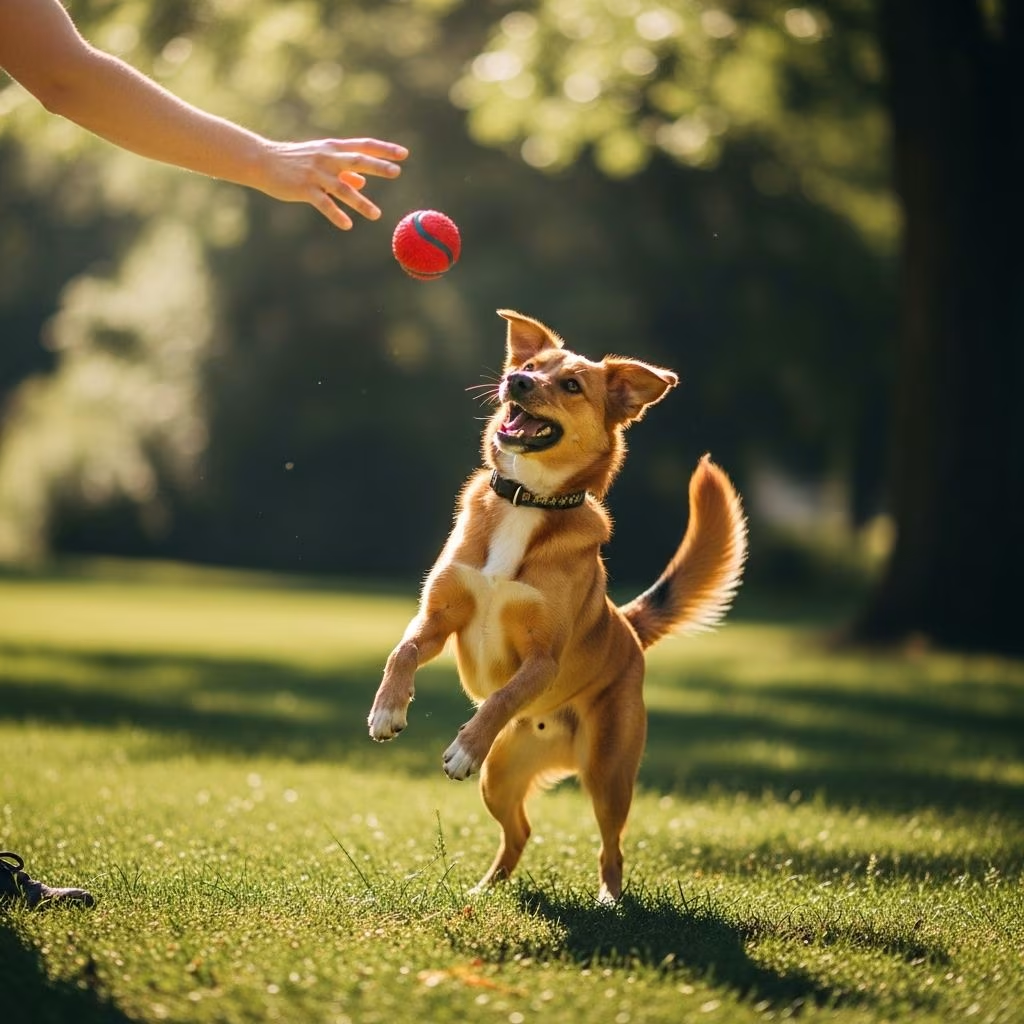
15-Minute Games to Play With Your Dog
Finding time to entertain and exercise your dog doesn’t require hours of commitment. With the right games and activities, you can provide your furry friend with both physical exercise and mental stimulation in just 15 minutes. These quick games are perfect for busy pet parents who want to strengthen their bond with their dogs while keeping them healthy and happy. Whether you’re stuck indoors on a rainy day or looking for a quick activity break, these six easy games will keep your pup engaged and tire them out faster than you might expect.
6 Quick and Easy Indoor Games With Dogs
1. Tug-of-War: A Misunderstood Classic
Contrary to popular myth, tug-of-war doesn’t cause aggression in dogs when played with proper rules and boundaries. This powerful game is one of the fastest ways to exercise your pup and requires minimal space, making it ideal for apartments or small living spaces. Tug-of-war taps into your dog’s natural instincts while building strength and confidence.
To play tug-of-war correctly, follow these essential rules:
- Your dog must wait for permission before taking the tug toy
- They must release the toy immediately when you give the command
- Incorporate obedience commands like “sit,” “wait,” and “down” during breaks between rounds to maintain focus and prevent over-excitement
This game serves double duty by combining physical exercise with training reinforcement. The breaks between rounds give you the perfect opportunity to practice basic commands, keeping your dog’s training fresh and sharp. A quality tug toy with proper texture and durability makes all the difference in keeping this game safe and enjoyable for both you and your pup.
2. Hide-and-Seek: Engaging Your Dog’s Nose
Hide-and-seek is a fantastic scenting game that taps into your dog’s incredible olfactory abilities. Even if your dog can’t find microscopic crumbs on your kitchen floor, this “search and rescue” style game often surprises pet parents by stumping their furry friends initially. The beauty of hide-and-seek is that you can run multiple rounds in a 15-minute period, resulting in a mentally tired and satisfied pup.
Here’s how to play hide-and-seek with your dog:
- Begin by stepping behind a nearby corner or furniture piece and enthusiastically call out “Find me!”
- Keep the game simple at first so your dog understands the concept quickly
- When your dog discovers you, praise them enthusiastically and ask them to stay
- Leave the room and hide in a new, slightly more challenging location
- As you get better at the game, use subtle hints like gentle whistling or soft clapping without giving too obvious hints
- Gradually increase hiding spot difficulty as your dog becomes more skilled
This game provides excellent mental enrichment because it forces your dog to use problem-solving skills and their natural hunting instincts. The excitement of finding you provides a rewarding emotional payoff that keeps dogs coming back for more.
3. Find the Toy: Mental Exercise for Your Canine Athlete
While many pet parents focus on physical exercise for their dogs, mental stimulation is equally important for overall health and behavior. “Find the toy” is one of the quickest ways to mentally exhaust your dog because it only takes a few repetitions to provide significant brain engagement. This game leverages your dog’s extraordinary scenting abilities in a structured, rewarding format.
To play “find the toy” with your pup:
- Start by placing a new, interesting toy in an obvious location where it’s partially visible, such as peeking out from under the couch
- In an excited voice, tell your dog “Find it!” and let them search
- When they locate and grab the toy, play with them to reward their success
- Hide the toy in another obvious spot and repeat the command
- Gradually increase the difficulty by hiding toys in less obvious locations as your dog improves
The beauty of this game is its flexibility and progressive difficulty. You can adjust the challenge level based on your dog’s abilities and experience, making it suitable for puppies just learning basic skills and senior dogs needing gentler mental stimulation.
4. Never-Ending Fetch: The Variation Game
Traditional fetch can become repetitive for dogs, but “never-ending fetch” revolutionizes this classic game by introducing variety and unpredictability. This game works particularly well for ball-crazy dogs and keeps them engaged by making them work faster and faster to discover what toy you’ll throw next.
Here’s how to teach your dog to play never-ending fetch:
- Ask your dog to sit as an opening ritual that encourages polite behavior
- Immediately toss a basic fetch toy, such as a tennis ball
- When your dog returns with the toy, ask them to drop it and immediately throw a completely different toy or ball
- If your dog hesitates to release the first toy, wiggle the new option enticingly to encourage them to drop their current prize
- Keep increasing the variety and appeal of the toys to maintain excitement
- Store multiple balls and toys in a bucket for quick access during play
The key to success is preparing a diverse collection of fetch toys before you start playing. Consider mixing basic tennis balls with textured options, squeaky toys, plush toys, and balls with unusual features like LED lights. This variety keeps your dog motivated and engaged throughout the entire 15-minute session. For dogs that prefer specific toy types, focus your collection on those preferences to maximize enjoyment.
5. Toy on a String: Interactive Play
This engaging game combines the interactive elements of tug-of-war with the chase instincts that make fetch so thrilling. A toy attached to a string creates dynamic play opportunities that engage your dog’s predatory instincts while giving you direct control over the game’s pace and intensity.
Playing with a toy on a string involves:
- Dangling or dragging a toy at the end of a string across the floor or through the air
- Varying the speed and direction to keep your dog engaged and excited
- Allowing your dog to catch the toy occasionally to maintain their enthusiasm
- Using this game as an indoor alternative to fetch on bad weather days
This game provides excellent aerobic exercise in a compact space and requires no running room, making it perfect for apartment living. The interactive nature of the play also strengthens your bond with your dog as you both participate in active, engaging play together.
6. Muffin Tin Game: Treat Discovery Adventure
The muffin tin game transforms an ordinary kitchen item into an engaging enrichment activity that combines hide-and-seek elements with treat rewards. This game is particularly effective for dogs that love searching and sniffing, and it creates a satisfying play experience that keeps dogs mentally engaged.
To set up and play the muffin tin game:
- Fill each cup of a muffin tin with different types of treats to maintain variety and interest
- Cover each cup with a tennis ball or similar ball-sized object
- Let your dog figure out how to push aside the balls to access the treats beneath
- Play this game on a carpeted surface to minimize noise from the tin hitting hardwood floors
- Once your pup has discovered and eaten all the treats, transition into a round of fetch to keep the fun and activity flowing
Variety is essential to keeping this game interesting and engaging. Gather multiple types of treats such as freeze-dried liver treats, cheese-flavored biscuits, and egg-based treats. Similarly, if your dog enjoys balls, use a variety of types from standard tennis balls to textured options that allow your pup to see the treats hidden below.
Why These Games Matter for Your Dog
Beyond simple entertainment, these 15-minute games provide crucial benefits for your dog’s overall health and behavior. Mental exercise is just as important as physical activity, with research showing that 15 minutes of mental stimulation can be as beneficial as 30 minutes of physical exercise for pets. These games help prevent behavioral problems stemming from boredom and excess energy, reduce anxiety, and strengthen the bond between you and your furry companion.
Tips for Success With Dog Games
To maximize the benefits of these games, keep a few important principles in mind. Always start with simple versions of games and gradually increase difficulty as your dog improves. Use high-value treats and toys that genuinely excite your dog to maintain motivation. Keep play sessions positive and fun by ending on a high note before your dog loses interest. Consistency matters, so try to incorporate these games into your daily routine rather than playing sporadically. Finally, always supervise play sessions and ensure all toys and treats are appropriate for your dog’s size and age.
Frequently Asked Questions
Q: Is tug-of-war bad for dogs?
A: No, tug-of-war is not inherently bad for dogs. When played with proper rules and boundaries, it’s actually an excellent form of exercise and training. The myth that it causes aggression has been widely debunked by dog trainers and behaviorists.
Q: How often should I play these games with my dog?
A: Ideally, aim to incorporate at least one 15-minute game session daily into your dog’s routine. Many dogs would benefit from multiple sessions throughout the day, especially high-energy breeds or younger dogs.
Q: Can older dogs play these games?
A: Yes, but adjust the intensity and duration based on your dog’s age and fitness level. Older dogs still benefit from mental and physical stimulation, but games should be gentler and shorter to prevent overexertion or injury.
Q: What if my dog doesn’t know the commands mentioned in these games?
A: Start by teaching basic commands like “sit,” “stay,” and “drop it” separately through dedicated training sessions. Once your dog understands these commands, you can incorporate them into these games for added training benefits.
Q: Are these games suitable for puppies?
A: Most of these games can be adapted for puppies, but keep sessions shorter and focus on games that don’t involve excessive jumping or running to protect developing joints. Hide-and-seek and the muffin tin game are particularly good for young dogs.
Q: What should I do if my dog becomes overly excited or aggressive during play?
A: Take a break and let your dog calm down. If aggressive behavior persists, consult with a professional dog trainer or veterinary behaviorist. Always maintain control of the game by using commands and breaks to manage excitement levels.
References
- 15-Minute Games You Can Play With Your Dog — Chewy. 2025. https://www.chewy.com/education/dog/training-and-behavior/15-minute-games-to-play-with-dogs
- The Importance of Mental Stimulation for Dogs — TRIXIE. 2024. https://www.chewy.com/trixie-mini-mover-activity-strategy/dp/146156
- Puzzle Games for Dogs: Interactive Enrichment — Chewy. 2025. https://www.chewy.com/b/puzzle-toys-games-2335



