

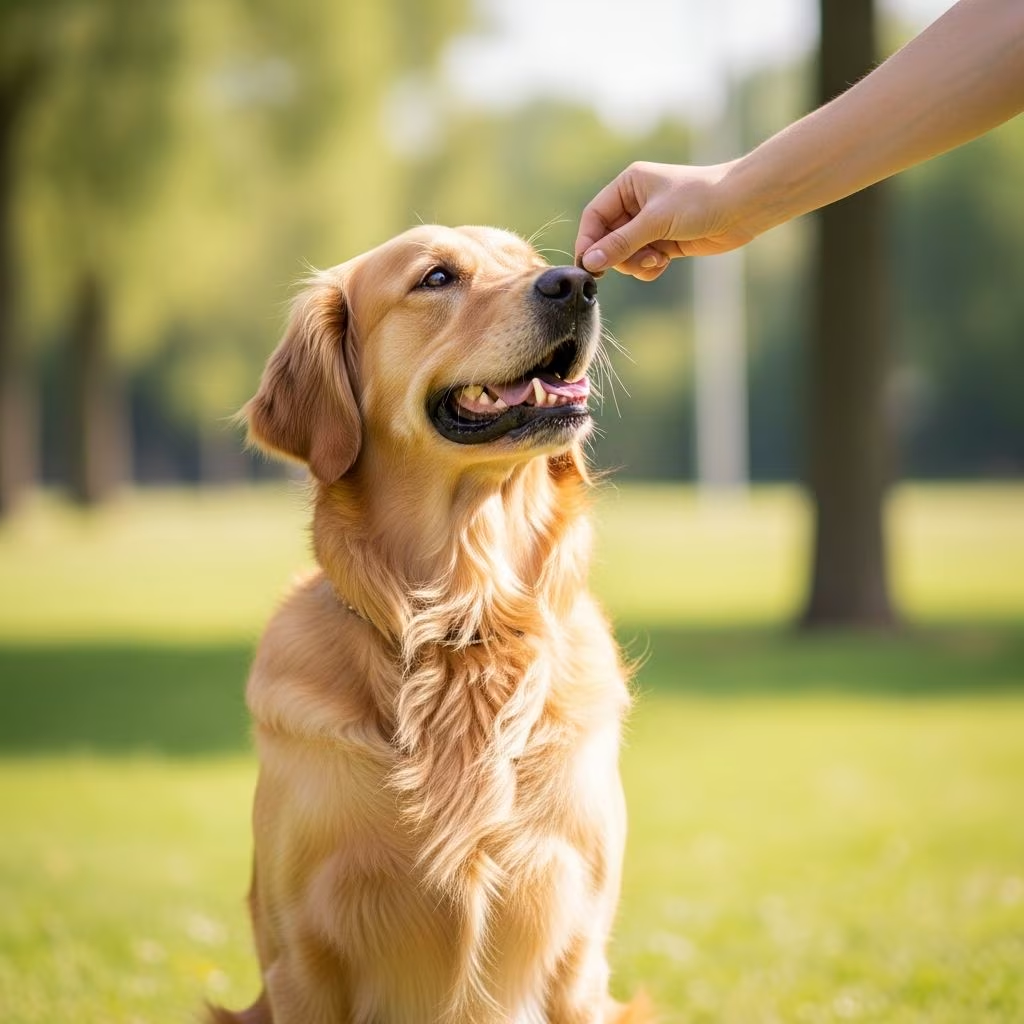
Golden Retrievers are renowned for their intelligence, eagerness to please, and naturally friendly disposition, making them one of the most popular dog breeds worldwide. However, their inherent traits don’t automatically translate into a well-trained companion. Training a Golden Retriever requires dedication, consistency, and an understanding of what motivates these remarkable dogs. Whether you’re a first-time dog owner or an experienced trainer, these ten tips will help you build a strong foundation for obedience and create a harmonious relationship with your furry friend.
1. Start with Positive Reinforcement
Positive reinforcement is the cornerstone of effective dog training and is particularly well-suited to Golden Retrievers. This training method involves rewarding your dog’s good behavior with treats, toys, praise, or a combination of these rewards, rather than punishing unwanted behavior. Research demonstrates that positive reinforcement is not only effective but often produces better long-term results than punishment-based methods.
When your Golden Retriever performs a desired behavior, immediately reward them to create a strong association between the action and the positive outcome. This approach leverages their natural desire to please you while building their confidence and enthusiasm for training. Golden Retrievers respond exceptionally well to this method because they thrive on your approval and the promise of rewards. The key is timing—deliver the reward within seconds of the correct behavior so your dog understands exactly what they did right.
2. Use High-Value Treats and Motivators
Not all treats are created equal when it comes to dog training. Golden Retrievers are food-motivated, but they’ll work harder and maintain focus better when you use high-value treats they absolutely love. These might include small pieces of chicken, cheese, hot dog, or special training treats that your dog doesn’t get during regular meals.
Identify what truly excites your Golden Retriever. Some dogs prefer food rewards, while others are more motivated by favorite toys or enthusiastic praise. During training sessions, use these high-value motivators to maintain your dog’s interest and encourage them to repeat the desired behavior. Reserve these premium rewards specifically for training to maximize their effectiveness, making them feel like special treats rather than everyday items.
3. Keep Training Sessions Short and Consistent
Golden Retrievers, like all dogs, have limited attention spans. Training sessions that are too long can lead to frustration for both you and your dog, reducing the effectiveness of your efforts. Instead, aim for short, focused training sessions held multiple times throughout the day.
For adult Golden Retrievers, sessions of around 10 minutes work best, while puppies require even shorter sessions of 5 minutes or fewer. This approach keeps your dog engaged and eager for training rather than bored or exhausted. Consistency is equally important—establish a regular training schedule and stick to it. Training at the same time each day helps your Golden Retriever anticipate training and maintain focus.
4. Master Basic Obedience Commands
Golden Retrievers are highly intelligent and naturally inclined to learn. Building a strong foundation with basic obedience commands is essential before moving to more advanced tricks or behaviors. The fundamental commands include:
- Sit: Often the easiest command to teach and an excellent starting point for training
- Stay: Helps manage your dog’s impulses and ensures safety in various situations
- Come: Perhaps the most critical command for safety and off-leash control
- Down: A useful command for calming your dog and managing excitement
- Heel: Essential for pleasant walks and controlling your dog in public spaces
Once these foundational commands are solid, your Golden Retriever will be more receptive to learning additional behaviors and tricks. These basic commands form the language between you and your dog, enabling better communication and control in various situations.
5. Choose a Quiet Training Environment
Environmental distractions significantly impact your Golden Retriever’s ability to focus and learn. When beginning training, always start in a quiet, calm environment with minimal distractions. This might be your living room, a quiet backyard, or an empty training facility.
Once your dog consistently demonstrates mastery of a command in this controlled environment, gradually introduce mild distractions and eventually train in busier settings. This progressive approach, called generalization, helps your dog understand that the command applies regardless of the environment. This systematic exposure prevents your dog from learning commands that only work in specific contexts, which is a common training failure.
6. Watch Your Dog’s Body Language
Understanding canine communication is vital for successful training. Your Golden Retriever uses body language to communicate stress, anxiety, and confusion. Common signs of stress during training include excessive blinking, yawning, turning their head away, ears pinned back, and tucked tail.
If you notice these signs, it’s time to stop training and give your dog a break. Pushing forward when your dog is stressed is counterproductive and can damage their confidence and enthusiasm for training. By respecting your dog’s emotional state, you maintain a positive association with training and prevent learned helplessness or anxiety-related behavioral issues.
7. Harness Your Dog’s Name as a Training Tool
Your Golden Retriever’s name is a powerful training tool that should not be overlooked. Teaching your dog to reliably look at or come to you when you say their name creates a foundation for all other training and provides an essential safety tool.
Begin by saying your dog’s name and immediately offering a high-value treat when they look at you. Repeat this process consistently over several weeks until your dog automatically orients toward you when they hear their name. Once this is established, you can use their name to redirect attention during training, regain focus during distractions, or initiate other commands. This simple skill is invaluable for managing your dog’s behavior and maintaining safety.
8. Practice the “Look” Command for Attention Control
Beyond responding to their name, teaching a dedicated “look” command gives you reliable attention control in any situation. This command is particularly helpful when your Golden Retriever encounters triggers like other dogs, unfamiliar people, or exciting environmental stimuli.
To train this command, hold a high-value treat close to your eyes and say “look” when your dog makes eye contact. Reward immediately with the treat and enthusiastic praise. With consistent practice, your dog will learn to focus on your face when they hear the command. This skill is invaluable for preventing reactive behavior, maintaining composure on walks, and ensuring your dog’s attention remains on you in potentially challenging situations.
9. Use Clicker Training for Precision
Clicker training is a popular method that uses a small mechanical device that makes a distinctive clicking sound to mark the exact moment your Golden Retriever performs the desired behavior. The click immediately precedes a reward, creating a clear association between the behavior and the reward.
While clicker training can be highly effective, it’s not absolutely necessary. Recent research indicates that training without a clicker is just as effective, especially if you use verbal markers like “yes” or “good” consistently. The key advantage of clicker training is its precision—the clicking sound is distinct and unmistakable, whereas your voice might carry different tones. Choose the method that feels most natural and comfortable for you, as your confidence and consistency matter more than the specific tool you use.
10. Know When to Seek Professional Help
While many dog owners successfully train their Golden Retrievers independently, professional dog trainers can provide invaluable guidance and expertise. A certified professional trainer can assess your specific situation, identify training challenges, and provide personalized strategies tailored to your dog’s personality and learning style.
Professional trainers are particularly helpful if you’re dealing with behavioral issues, if training progress stalls, or if you’re uncertain about how to address specific challenges. They can get your training journey off on the right foot and prevent the development of ingrained bad habits. Don’t hesitate to invest in professional guidance—it often saves time, frustration, and money in the long run.
Advanced Training Considerations
Teaching Retrieval Commands: Golden Retrievers have a natural retrieving instinct, and many owners enjoy teaching retrieval commands. You can teach your Golden Retriever to retrieve toys by name, adding mental stimulation and fun to your training routine. Start by introducing the toy with its name, play with it enthusiastically, then progress to short retrieval exercises.
Managing Excitement and Energy: Golden Retrievers are energetic dogs that require both physical and mental exercise. They thrive on interaction and shouldn’t simply be left alone in a yard to occupy themselves. Incorporate training as part of their daily exercise routine, using it to channel their energy productively and provide mental stimulation alongside physical activity.
Preventing Behavioral Issues: Positive reinforcement isn’t only for learning new skills—it’s also an effective tool for reducing unwanted behaviors. When you notice your Golden Retriever exhibiting an undesired behavior, teach them an alternative, acceptable behavior and reward that instead. For example, if your dog jumps on guests, teach them to sit when guests arrive and reward that behavior generously.
Common Training Challenges and Solutions
| Challenge | Common Cause | Solution |
|---|---|---|
| Not coming when called | Insufficient practice; weak rewards | Start training immediately; use high-value treats; practice daily in safe environments |
| Jumping on people | Excitement; seeking attention | Teach sit command; reward calm greetings; practice consistency with all visitors |
| Pulling on leash | Excitement; lack of structure | Practice heel command; change direction when pulling; reward loose-leash walking |
| Excessive barking | Under-stimulation; alerting behavior | Increase exercise; teach quiet command; identify and address triggers |
| Difficulty focusing | Environmental distractions; insufficient motivation | Train in quiet environments first; increase treat value; reduce session length |
Frequently Asked Questions
Q: At what age should I start training my Golden Retriever?
A: Begin training as early as possible, ideally when you bring your puppy home. Young puppies can learn basic commands and behaviors. Keep sessions very short (5 minutes or less) and make training fun and playful.
Q: How long does it take to train a Golden Retriever?
A: Basic obedience commands can be established within weeks with consistent daily practice, but reinforcement and refinement continue throughout your dog’s life. More complex behaviors and reliable response in distracting environments may take months to develop.
Q: What’s the hardest command to teach a Golden Retriever?
A: Coming when called is typically the most challenging command for most dogs, including Golden Retrievers. This requires consistent practice starting from puppyhood and reliable, high-value rewards every time your dog responds correctly.
Q: Can I train my Golden Retriever without treats?
A: While treats are highly effective, you can use other rewards like toys, play, or enthusiastic praise. However, many trainers recommend using food as the primary reward during training because it’s quick, easy, and highly motivating for most dogs.
Q: Is punishment-based training effective for Golden Retrievers?
A: No. Research shows positive reinforcement is more effective and produces better behavioral outcomes than punishment-based methods. Punishment can damage your relationship with your dog and create anxiety or fear-based behaviors.
Q: How do I know if my Golden Retriever is ready to learn advanced tricks?
A: Once your dog reliably responds to basic obedience commands (sit, stay, come, down) in various environments and distractions, they’re ready for advanced training. Advanced tricks build on these foundational commands.
Conclusion
Training your Golden Retriever is a rewarding journey that strengthens your bond and creates a well-behaved companion. By implementing these ten tips—focusing on positive reinforcement, maintaining consistency, keeping sessions short and engaging, and respecting your dog’s emotional state—you’ll set the stage for successful training outcomes. Remember that Golden Retrievers are eager learners who genuinely want to please you. Patience, consistency, and kindness will transform training into an enjoyable activity you both look forward to. Whether you’re teaching basic commands or advanced tricks, the principles remain the same: reward desired behavior, maintain consistency, and celebrate progress along the way.
References
- Positive Reinforcement in Dog Training — American College of Veterinary Behaviorists. 2024. https://www.dacvb.org/
- Golden Retriever Training and Behavior Guide — The American Kennel Club. 2024. https://www.akc.org/dog-breeds/golden-retriever/
- Effectiveness of Clicker Training in Canine Behavior Modification — International Society of Canine Behaviorists. 2024. https://www.iscb.org/
- Canine Body Language and Stress Signals — Fear Free Pets. 2024. https://www.fearfreehappyhomes.com/
- Dog Training Best Practices and Safety — Certification Council for Professional Dog Trainers. 2024. https://www.ccpdt.org/



