

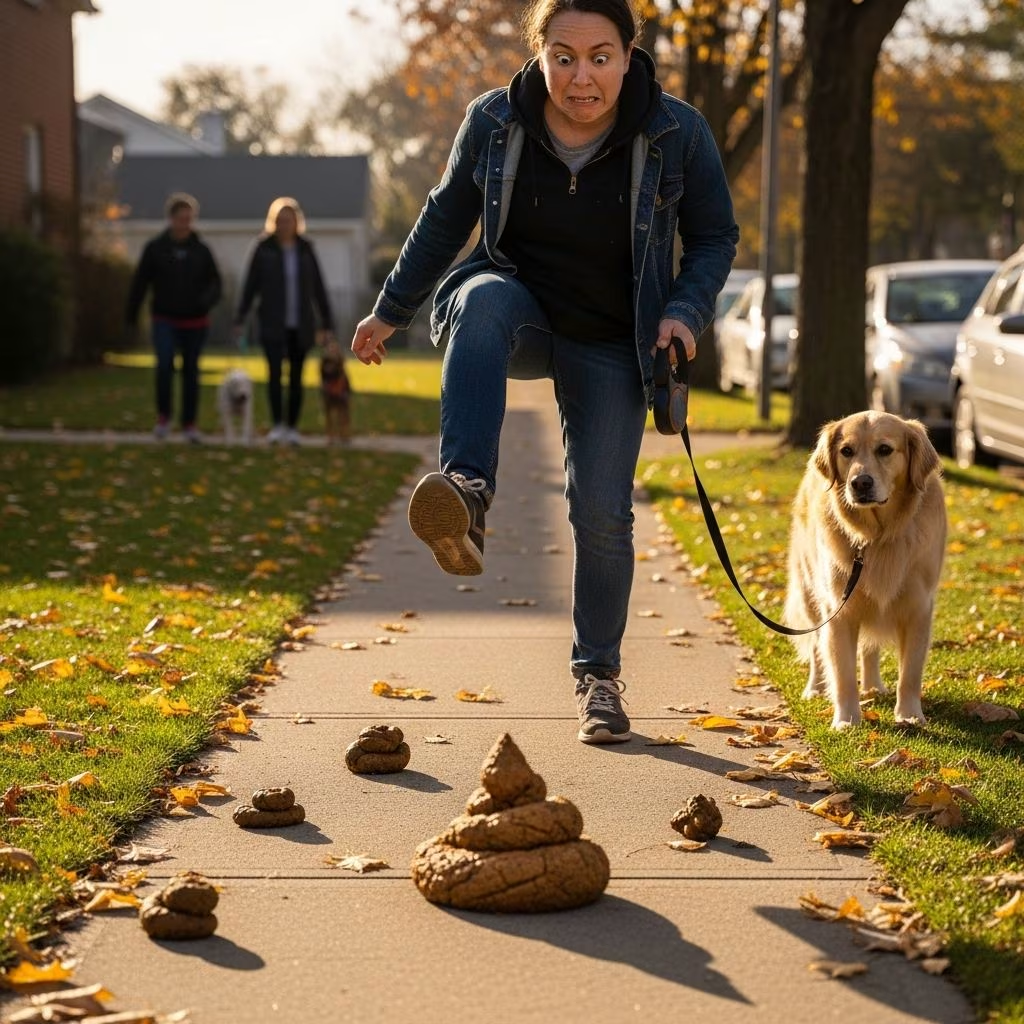
Let’s be honest: no one genuinely enjoys picking up dog poop. Whether you have a tiny Chihuahua or a massive Great Dane, the experience is universally unpleasant. The smell, the mess, the awkward positioning required—it’s enough to make even the most dedicated dog parent cringe. And yet, here we are, day after day, carefully maneuvering dog poop bags to ensure not a single millimeter of bare hand touches anything unseemly. We’re not only expected to pick it up, but we’re also expected to transport it until we find a garbage can, which inevitably feels like miles away.
The social pressure is relentless too. Fellow dog parents silently judge us with their eyes if we even dare to consider leaving a pile behind. We’ve been shamed into submission, forced to follow the unspoken rules of pet parenthood. But what if we didn’t have to? What if there were other options—creative, hilarious, and utterly unconventional methods to dodge the dreaded poop pickup duty?
Welcome to a tongue-in-cheek guide to the creative (and completely unrecommended) tactics that dog parents have developed over the years. While we absolutely do not endorse these methods—responsible pet ownership means proper waste management—we can certainly appreciate the ingenuity and humor behind them. So settle in, grab your sense of humor, and discover the ten most inventive ways dog parents have attempted to avoid their most unpleasant daily responsibility.
1. Look and Book
This straightforward method works in practically any situation and is especially appealing to those who prefer avoidance over confrontation. The strategy is beautifully simple and requires only two easy steps.
First, perform a thorough environmental scan. Check the immediate area to confirm that no one witnessed the unfortunate incident. Be particularly vigilant about people sitting in parked cars, lurking behind trees, or hiding in other inconspicuous locations. Once you’ve determined the coast is clear, employ delaying tactics. Pull out your phone and pretend to be deeply engrossed in urgent messages or social media. Check your watch. Tie your shoe. Do anything that makes you look occupied while any potential witnesses pass by.
Once you’ve confirmed that no judgemental eyes are locked onto you, execute the final phase: run and never look back. Don’t pause to reconsider. Don’t glance over your shoulder. Just move forward with purposeful determination and hope that no one connects the dots.
2. Invisible Pet Parent
This method relies on psychological suggestion and strategic positioning. Invisibility, of course, isn’t literal—but the concept is that if you don’t acknowledge what’s happening, perhaps no one else will either.
This tactic works best in cooler climates where wearing a hoodie doesn’t seem completely out of place (and definitely won’t work if you live somewhere hot and humid). The key is complete avoidance of visual awareness. When you notice your pup settling into the telltale squat position, resist every instinct to look around and assess your surroundings. Instead, deliberately look downward and turn your back to any potential onlookers.
The logic behind this method seems to be that if you can’t see the judgment, it doesn’t exist. And if you’re not making eye contact with anyone, perhaps they’ll assume you’re not the owner of this particular dog. The hoodie provides psychological cover—a barrier between you and the disapproving stares you’re convinced are heading your way.
3. Hover and Cover
This technique appeals to dog parents who feel at least somewhat guilty about leaving waste unattended but lack the commitment to actually pick it up properly. It’s the compromise position for those riding the fence between responsibility and evasion.
After your dog completes their business, hover over the pile as though you’re genuinely preparing to scoop it up. Your goal is to block anyone’s direct line of sight to the waste while you frantically search for something—anything—to cover it up. A large leaf works wonderfully. A stick suffices. Even a discarded napkin might do in a pinch. Get creative with whatever resources surround you.
Once you’ve identified an appropriate covering object, carefully place it over the pile, taking great care not to accidentally make direct contact with the waste itself. The result? A sort of “found art” installation that technically obscures the problem without actually solving it. To any casual observer, it might just look like you’re performing some sort of strange gardening ritual.
4. The Pretend Bend and Scoop
This tactic requires a modicum of acting ability and a complete lack of concern about the ethics of public deception. It’s theater for the outdoors, with a captive audience of judgmental neighbors.
The scenario plays out like the climactic scene of a one-act play. Your audience is watching intently, waiting for the moment when you’ll perform your duty as a responsible pet parent. So you bend down, moving with deliberate purpose. You reach toward your pocket where your poop bag would normally reside. You perform the most convincing pantomime of bagging up waste that your acting skills can muster. Your movements are fluid, realistic, convincing. To anyone watching from a distance, it’s indistinguishable from the real thing.
Then you stand up, give a satisfied nod, and continue on your walk. Everyone is happy. Everyone thinks you’ve done the right thing. Order is restored to the universe, or at least to your neighborhood’s perception of you.
5. The Duck and Shuffle
This method relies on strategic misdirection and the convenient fact that there’s almost always an existing pile of dog waste somewhere in the vicinity of wherever your dog decides to go.
The technique is wonderfully devious. Locate an existing pile of dog waste nearby—and let’s be honest, in most neighborhood parks and busy walking areas, this isn’t difficult. Using a stick, carefully shuffle your dog’s fresh droppings toward the existing pile. Blend them together until they’re indistinguishable from one another. If anyone confronts you about your non-action, simply declare with confidence: “That’s not my dog’s poop.”
Technically, you’re only telling half a lie in this scenario. Yes, that pile existed before your dog’s contribution, so it’s not entirely your dog’s poop. This is the kind of technicality that lets you sleep at night while avoiding your actual responsibility. One self-appointed neighborhood watch volunteer described this method with clear disdain: “I hate the duck and shuffle—there’s no way to prove it, but I’m on to you!”
6. The Sympathy Grab
This approach works best for dog parents who still want to maintain their reputation while avoiding the actual work. It combines performance art with strategic equipment failure.
To execute this maneuver properly, bring along an empty dog poop bag dispenser—one with absolutely no bags inside it. As your dog does their business, act as though you’re absolutely, positively going to pick it up. Wait until they finish. Then reach for your dispenser with a flourish and immediately gasp with theatrical horror.
“Oh no! I’ve run out!” you exclaim, your face a mask of genuine shock and mortification. Frantically search your pockets. Rifle through your bag. Check the same empty dispenser multiple times as though bags might magically appear if you look often enough. Repeat this performance several times, trying different versions of increasingly desperate exclamations.
After an appropriately dramatic scene, throw your hands up in exasperation and declare, “I can’t believe this day!” before walking away with your dignity barely intact. Anyone watching will assume you genuinely intended to do the right thing but were thwarted by circumstances beyond your control.
7. The Reverse the Blame
This tactic turns the tables and puts the burden of judgment on someone else entirely. While specific details aren’t provided for this method, the general principle involves deflecting responsibility or suggesting that someone else should have handled the situation.
The beauty of this approach lies in its audacity—shifting focus away from your own negligence and onto the supposed failures of park maintenance staff, municipal services, or even your dog’s supposed medical condition. It’s gaslighting on a neighborhood scale.
8. Desperation: The Final Resort
This tactic represents the absolute last resort, to be used only when every other method has failed or become impossible to execute. It’s a method born of pure desperation and questionable judgment.
When all else fails—when the Look and Book isn’t possible, the Invisible Pet Parent won’t work, and even the Pretend Bend and Scoop seems too risky—there’s only one option left. Hopefully you’re wearing your old sneakers and not your nice ones, because you’re going to do the unthinkable: step directly into the pile.
There’s a certain logic to this madness. Once you’ve stepped in it, you can claim that the poop is already compromised and scattered. You can shuffle it around with your shoe sole while continuing your walk. The evidence is literally on your shoe rather than neatly bagged and transported. It’s the nuclear option of poop avoidance tactics, and frankly, it’s best left undiscussed.
Why These Methods (Definitely) Don’t Work
Before you get any ideas about actually implementing any of these tactics, let’s be clear: they’re humorous thought experiments, not actual solutions. Responsible pet ownership requires proper waste management. Leaving dog poop on public property isn’t just unpleasant—it’s also unhygienic, potentially illegal, and harmful to your community.
Neglecting to pick up after your dog can damage lawns, contaminate local water sources, spread disease, and create public health hazards. Every piece of waste left behind affects your neighborhood’s cleanliness and your fellow residents’ quality of life. The joke methods highlighted here are funny precisely because we all recognize them as terrible ideas that we’d never actually implement.
The Responsible Alternative
Instead of attempting any of these creative evasion tactics, consider these genuinely helpful approaches to making poop pickup more tolerable. Always carry dog poop bags with you, even for short walks. Invest in a hands-free scooper for your yard to minimize direct contact with waste. Use scented or biodegradable bags to reduce the unpleasant experience. Keep wet wipes handy for quick cleanups. Consider having a poop scooping service handle the responsibility if it genuinely causes you distress.
If all dog owners picked up just one extra piece of waste per walk, neighborhoods would be significantly cleaner. That’s the real goal of responsible pet parenthood—not creative avoidance, but genuine community contribution.
Frequently Asked Questions
Q: Are these methods actually recommended?
A: Absolutely not. This guide is presented with humor and irony. Proper dog waste pickup is a responsibility of pet ownership and these methods are not endorsed by Chewy or any responsible pet care organization.
Q: What’s the actual best way to pick up dog poop?
A: Use a sturdy dog poop bag, pick up all visible waste including small pieces, tie the bag securely, and dispose of it in a proper trash receptacle. For your yard, invest in a hands-free scooper with a long handle.
Q: Why is picking up after your dog important?
A: Dog waste can spread diseases, contaminate water sources, damage grass, and create health hazards in public spaces. Proper cleanup is both a legal requirement in most areas and an ethical responsibility to your community.
Q: What supplies make poop pickup easier?
A: Biodegradable bags, hands-free scoopers with long handles, bag dispensers that attach to leashes, scented bags, extra-thick bags for larger dogs, and wet wipes all make the process more manageable and hygienic.
Q: Can I hire someone to pick up my dog’s poop?
A: Yes, many areas offer professional poop scooping services that regularly clean your yard. This is a legitimate option if the task genuinely causes you distress or if you have mobility limitations.
References
- Dog Poop Disposal: Tips for Properly Cleaning Up After Your Dog — Chewy. 2024. https://www.chewy.com/education/dog/general/dog-poop-disposal-tips-for-properly-cleaning-up-after-your-dog
- Why Dogs Eat Poop And How To Stop It — American Kennel Club. 2024. https://www.akc.org/expert-advice/health/why-dogs-eat-poop/
- Dog Poop Bags & Scoopers — Chewy. 2024. https://www.chewy.com/b/dog-poop-supplies-and-gear-354
- 10 Pet Hygiene Tips You Should Be Following — PetMD. 2024. https://www.petmd.com/dog/slideshows/10-pet-hygiene-tips-you-should-be-following



