

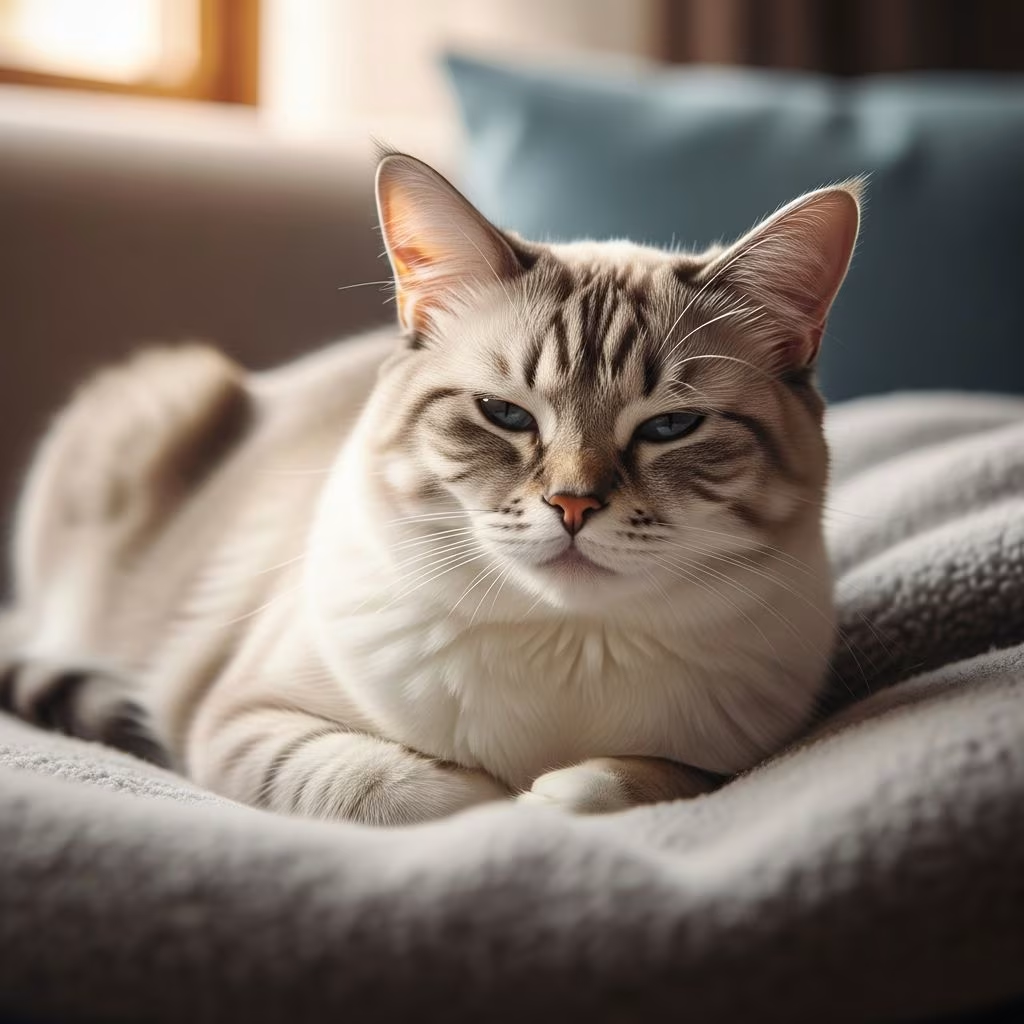
10 Docile Cat Breeds: Finding Your Perfect Calm Companion
When it comes to selecting a cat for your home, temperament plays a crucial role in determining whether the match will be harmonious. Not all cats are high-energy sprinters or vocal performers; many breeds are known for their remarkably calm, docile nature and affectionate personalities. If you’re seeking a feline companion that embodies tranquility, loyalty, and a laid-back approach to life, exploring docile cat breeds is an excellent place to start. These gentle creatures make wonderful pets for families, seniors, and anyone who values a peaceful home environment.
Docile cats are characterized by their quiet demeanor, low activity levels, and strong bonds with their owners. They typically enjoy quiet environments, prefer lounging in comfortable spots, and form deep connections with their families. Whether you live in an apartment or a sprawling house, these calm breeds adapt well to various living situations and rarely display aggressive or destructive behaviors.
Understanding Docile Cat Breeds
Docile cat breeds have been selectively bred over many generations to develop specific temperamental traits. These traits include reduced vocal tendencies, lower activity requirements, greater patience, and enhanced affection toward their owners. Unlike more independent or hyperactive breeds, docile cats thrive on companionship and benefit from stable routines and quiet environments.
The key characteristics that define docile cat breeds include their calm personality, tendency to avoid aggression, adaptability to new environments, and genuine affection for human interaction. These cats are often described as “people-oriented” and may follow their owners around the house or seek out laps for cuddle sessions.
The 10 Most Docile Cat Breeds
1. Ragdoll: The Gentle Giant with Puppy-Like Traits
The Ragdoll stands as one of the most recognizable docile cat breeds, earning its name from its distinctive tendency to go completely limp when picked up, much like a ragdoll. This large, heavy breed features a semi-long, silky coat and a deeply relaxed disposition. Ragdolls are renowned for their extremely affectionate nature, friendliness toward strangers, and peaceful coexistence with other cats, provided they receive proper socialization from a young age.
What makes Ragdolls particularly special is their “puppy-like” behavior—they often follow their owners around the house and enjoy being carried or held. They possess a low activity level and rarely display aggression toward either people or other animals. Ragdolls adapt remarkably well to new environments and generally avoid confrontational situations. For families seeking an affectionate, calm companion that thrives on human interaction, the Ragdoll represents an excellent choice.
2. Persian: The Epitome of Tranquility
Persians embody calm and tranquility like few other breeds. With a passive personality and laid-back disposition, these cats are the quintessential lap pets. They are naturally quiet and may exhibit some shyness or hiding behavior around strangers, but they demonstrate remarkable adaptability to various environments once they feel secure.
Persians thrive in quiet homes with consistent routines and often struggle with loud music or excessive noise, which they find annoying rather than frightening. Their non-territorial nature means they generally coexist peacefully with other cats, even in show settings. A Persian prefers serenity above all else, making them ideal companions for individuals who appreciate a peaceful, predictable lifestyle.
3. Maine Coon: The Gentle Giants of the Cat World
Despite their impressive size—Maine Coons are among the largest domestic cat breeds—these magnificent felines possess surprisingly gentle and docile temperaments. Over 100 years of selective breeding has cultivated their winning personality and calm demeanor. Maine Coons feature strong, muscular builds with broad chests, yet they remain consistently quiet and remarkably affectionate with their owners.
What distinguishes Maine Coons from smaller docile breeds is their outgoing nature and lack of fear toward strangers, despite their peaceful disposition. They are non-aggressive toward both people and other cats, making them excellent family pets. Maine Coons combine the best qualities of larger breeds with the emotional intelligence and bonding capacity typically associated with smaller companions.
4. Selkirk Rex: The Curly-Coated Calm Companion
Easily identified by their distinctive curly coat and broad head, Selkirk Rex cats share many quiet characteristics with their parent breed, the Persian. While slightly more playful and active than Persians, Selkirk Rex cats maintain the calm, docile temperament that makes them wonderful house pets. They handle show ring situations well and adapt comfortably to handling, demonstrating their easygoing nature.
The Selkirk Rex represents an excellent choice for those who love the Persian’s serene personality but desire a companion with slightly more interactive energy. Their unique appearance combined with their gentle nature makes them distinctive additions to any cat-loving household.
5. Siberian Forest Cat: The Mellow Intelligent Companion
Another substantial breed, the Siberian Forest Cat is a large, heavy cat that maintains a remarkably mellow and laid-back temperament. These cats are social with both people and other cats, displaying genuine unconcernedness toward unfamiliar felines. A striking characteristic of Siberians is their tendency to roll onto their backs to allow strangers to rub their bellies—a clear sign of trust and comfort.
Siberian Forest Cats are both affectionate and intelligent, often preferring to solve problems independently while remaining deeply connected to their families. Interestingly, they possess an unusual attraction to water and may enjoy playing in sinks or bathtubs. These adaptable cats feel equally at ease in show halls and home environments, making them flexible companions.
6. Tonkinese: The Devoted Social Butterfly
The Tonkinese emerged from crossing Burmese and Siamese breeds, successfully combining the best temperamental traits of both parent breeds. While less vocal than their Siamese relatives, Tonkinese cats retain the affectionate nature and devotion characteristic of the Burmese. Medium-sized with muscular builds, they display more activity and adventurousness compared to some other docile breeds on this list.
Tonkinese cats prove remarkably trainable, with many successfully learning to walk on leashes and respond to commands. Their combination of devotion to owners, reduced vocalization, and slightly more interactive energy makes them appealing to families seeking an engaging yet calm companion.
7. Russian Blue: The Devoted Homebody
Russian Blues have long been recognized as ultimate homebodies, finding their greatest happiness within their own homes surrounded by familiar family members and predictable routines. Their discomfort in unfamiliar environments historically made them challenging show cats, though the breed has gradually become more outgoing over time. Despite this evolution, Russian Blues remain excellent choices for individuals seeking devoted, quiet companions.
Easily recognized by their distinctive double coat—dense, silky fur that stands at a 45-degree angle, allowing patterns to be traced into it—Russian Blues are visually striking companions. Their preference for familiar surroundings and quiet routines makes them particularly suited for individuals with consistent, predictable lifestyles.
8. Korat: The Devoted and Cautious Homebody
Similar to Russian Blues, Korats are complete homebodies devoted exclusively to their people and preferring to remain in safe, familiar surroundings. This strong preference for known environments occasionally presents challenges in show settings, where some Korats may vocalize their displeasure during handling. However, while the breed may initially appear fearful in new environments, they have not demonstrated aggressive tendencies toward people.
Korats form intense bonds with their families and thrive best in stable, consistent home environments. Their cautious nature should not be mistaken for unfriendliness; rather, it reflects their preference for predictability and security. For individuals who can provide a stable, quiet home, Korats become wonderfully devoted and affectionate companions.
Key Characteristics of Docile Cat Breeds
Docile cat breeds share several defining characteristics that make them ideal for peaceful households:
- Quiet Demeanor: These breeds vocalize infrequently and prefer quiet environments, creating peaceful home atmospheres.
- Low Activity Levels: Docile cats require less playtime and exercise compared to more active breeds, making them suitable for sedentary owners.
- Affectionate Nature: Strong bonds with owners and family members characterize these breeds, with many seeking physical affection through cuddling and lap time.
- Non-Aggressive Behavior: These cats rarely display aggressive tendencies toward people, other cats, or animals.
- Environmental Adaptability: Many docile breeds adjust well to various living situations, from apartments to houses, provided their emotional needs are met.
- Tolerance and Patience: These cats generally tolerate handling, grooming, and various household activities without stress.
Choosing the Right Docile Breed for Your Home
Selecting among docile cat breeds depends on several factors specific to your household and lifestyle. Consider the following aspects when making your decision:
Living Space: While all docile breeds adapt reasonably well to apartments, larger breeds like Maine Coons and Siberians benefit from additional space. Smaller apartments suit Russian Blues, Korats, and Tonkinese cats equally well.
Grooming Commitment: Persian and Selkirk Rex cats require regular, consistent grooming to maintain their coats. If grooming seems overwhelming, consider shorter-coated options like Russian Blues or Korats.
Social Interaction Needs: Some docile breeds, like Ragdolls and Tonkinese cats, actively seek human interaction and may become anxious if left alone frequently. Russian Blues and Korats, while devoted, tolerate alone time more readily.
Family Composition: Maine Coons and Ragdolls excel in family environments with children, while quieter breeds may suit quiet, adult-only households.
Environmental Preferences: Persian and Russian Blue cats strongly prefer quiet, consistent environments. Siberian Forest Cats and Tonkinese prove more adaptable to varying activity levels.
Care Considerations for Docile Cat Breeds
Docile cat breeds have specific care requirements that should be understood before adoption:
Environmental Enrichment: Despite their calm nature, these cats benefit from appropriate enrichment opportunities like perches, scratching posts, and interactive toys. Mental stimulation prevents boredom and maintains emotional health.
Routine and Structure: Many docile breeds, particularly Persians, Russian Blues, and Korats, thrive with consistent daily routines. Sudden changes or disruptions can cause stress.
Regular Veterinary Care: Maintain appropriate vaccination schedules and health screenings. Larger breeds like Maine Coons may require monitoring for breed-specific health conditions.
Dental Health: Many docile breeds, particularly Persians and Exotic Shorthairs, benefit from regular dental care and monitoring.
Frequently Asked Questions About Docile Cat Breeds
Q: Are docile cat breeds suitable for families with young children?
A: Yes, many docile breeds like Ragdolls, Maine Coons, and Birmans excel with children. Their patient, non-aggressive nature makes them wonderful family pets. However, supervision is always recommended to ensure gentle handling.
Q: How much exercise do docile cats need?
A: Docile cats typically require less exercise than active breeds. Short play sessions and environmental enrichment suffice. However, all cats benefit from daily mental and physical stimulation.
Q: Can docile cats be left alone for extended periods?
A: Most docile cats tolerate alone time better than highly social breeds. However, individual cats vary. Russian Blues and Korats tolerate solitude well, while Ragdolls and Tonkinese prefer regular human interaction.
Q: Do docile cat breeds require special diets?
A: Docile breeds don’t inherently require special diets. However, larger breeds like Maine Coons may benefit from formulations supporting joint health. Consult your veterinarian for breed-specific nutritional guidance.
Q: Are docile breeds suitable for first-time cat owners?
A: Absolutely. Docile breeds like Ragdolls, Persians, and Birmans are excellent choices for first-time owners due to their tolerant, affectionate nature and lower maintenance behavioral requirements.
Q: How long do docile cat breeds typically live?
A: Most domestic cats, including docile breeds, live 12-18 years with proper care. Some individuals live into their 20s. Consistent veterinary care, appropriate nutrition, and enrichment contribute to longevity.
References
- 10 Lazy Cat Breeds — Chewy. 2024. https://www.chewy.com/education/cat/general/behavior-breeds-10-docile-cat-breeds
- Top 10 Friendliest Cat Breeds for a Loving Home — Purrfect Grooming. 2024. https://purrfectgrooming.pet/blog/b/friendliest-cat-breeds/
- 13 Friendliest Cat Breeds — PetMD. 2024. https://www.petmd.com/cat/general-health/friendliest-cat-breeds
- The Top 10 Most Affectionate and Friendliest Cat Breeds — Purina UK. 2024. https://www.purina.co.uk/find-a-pet/articles/cat-types/breed-guides/friendliest-cat-breeds
- Affectionate Cat Breeds — Zoetis Petcare. 2024. https://www.zoetispetcare.com/breed-explorer/traits/affectionate-cat-breeds



